How to Get Rid of Mildew Smell
If you smell mildew in your home, you’ll want to find the source quickly as it's one of the first indications that mold has begun forming. Thankfully, the steps on how to get rid of mildew smell are much easier than you may realize, and the items needed to remove mildew or musty smells are probably right in your home. The faster you can tackle mildew, the sooner you can protect your home against health hazards and considerable damage.
Mildew thrives in moisture and is typically found in bathrooms, kitchens, and basements. You can eliminate mildew and musty odors with a simple toothbrush, sponge, and a few cleaning supplies, depending on the type of surface you’re cleaning. Here’s how to get rid of mildew smell and keep it away permanently.
Is mildew dangerous?
Mildew can be dangerous if you don't take care of it early, as frequent exposure to mildew (which is an early sign of mold) can cause respiratory issues. This holds particularly true for those with asthma or compromised immune systems. Those who are exposed to a moderate amount of mildew may experience itchy eyes, sneezing, and coughing. In addition to impacting one’s personal health, not properly eliminating mildew can eat away at the structure of a building and decompose walls and ceilings. Mildew can also grow on and damage porous objects such as carpet and furniture. The longer a homeowner waits to eliminate mildew, the more expensive issues can be to repair. Moldy and musty smells share some similarities in that they both stem from the growth of mold or mildew, usually in damp areas. Musty smells are typically not as strong as moldy odors, but you should take the same action for both. Mildew looks like a powdery, spotty substance typically found on materials such as fruits, vegetables, and plants. Mold is typically thicker and can cause structural damage since it penetrates deeper into the material on which it grows. Molds can grow on plant materials as well, but it's also commonly found on building materials such as walls, flooring, towels, tiles, and clothing.How to remove that mildew smell in 5 steps
- Step 1: Find the source of the mildew.
- Step 2: Protect yourself with respiratory protection and gloves, and mix one cup of bleach with one gallon of warm water.
- Step 3: Dip a toothbrush into the bleach mixture and scrub vigorously.
- Step 4: Repeat until the mildew is gone.
- Step 5: Dry the area fully with a rag or towel.
Removing the musty smell, step by step
Step 1: Find the source of the mildew and musty smell
If the source of the mildew and the musty smell isn't immediately apparent, remove as many items as possible from the area and inspect all corners, ceilings, grout, tile, tub caulking, and porous objects, such as carpets, clothing, and upholstered furniture. It may be necessary to remove all items from the room entirely to find the source.Step 2: Create a bleach mixture
Put on rubber gloves to protect your hands and skin, wear a mask to ensure you don't breathe in the bleach mixture and mold, and make sure there's plenty of ventilation in the room. Once you're fully protected, combine one cup of bleach with one gallon of warm water.Step 3: Remove the mildew and musty smell
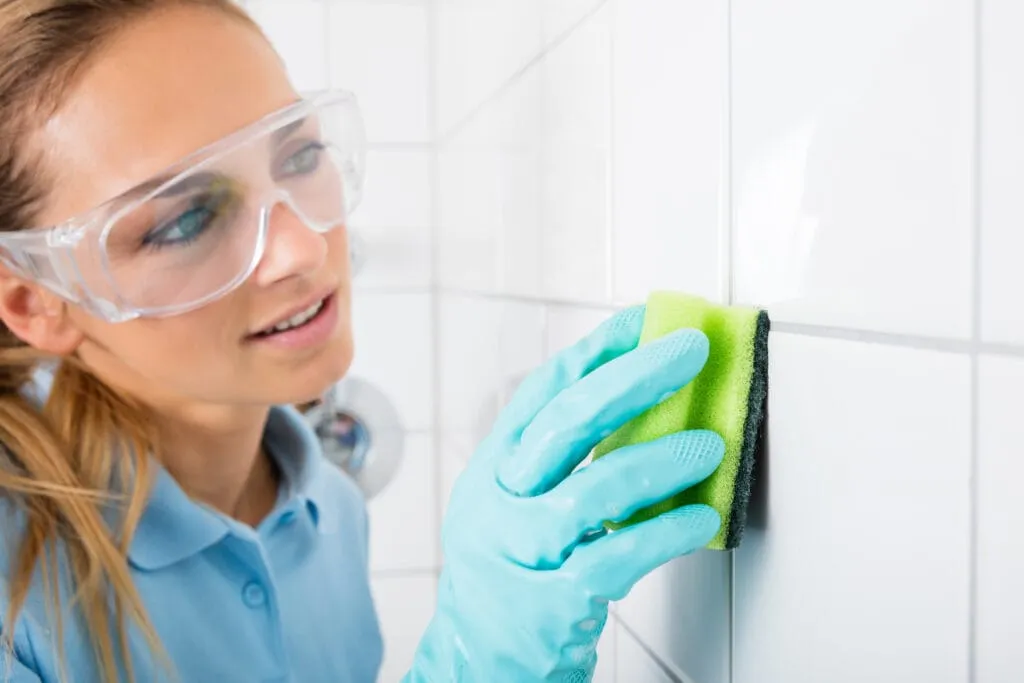
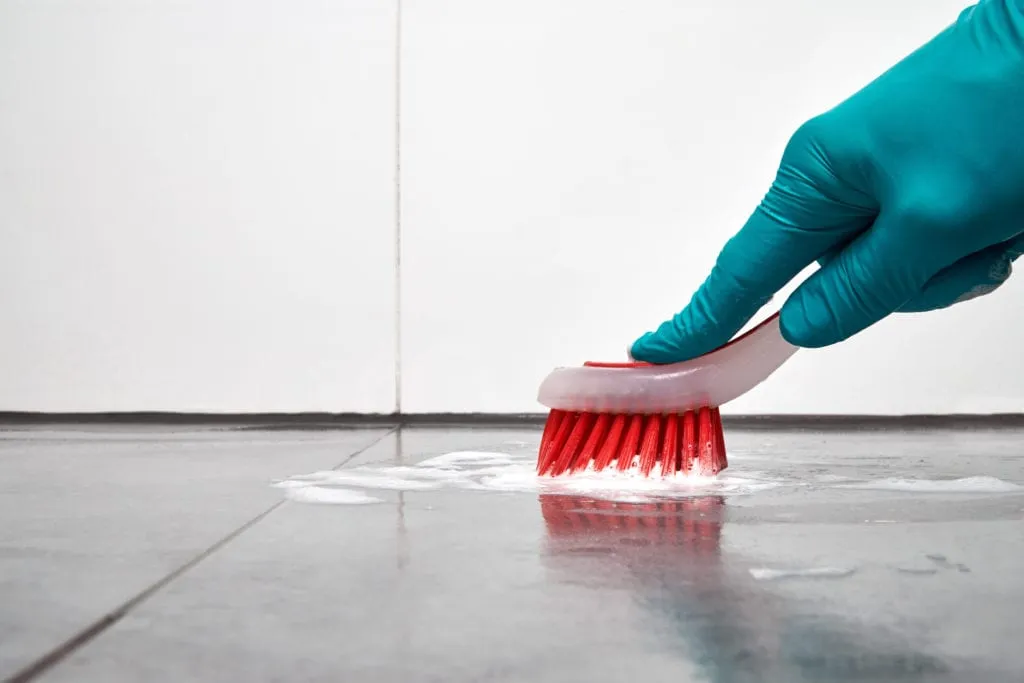
Dip a toothbrush into the bleach and water mixture. Scrub the mildew stain vigorously. Then remove the bleach residue with a clean, wet sponge.Step 4: Repeat
Repeat the previous step as many times as necessary until you see the mildew has disappeared and you can no longer smell the musty odor.Step 5: Dry the area completely
Dry the affected area entirely after removing the mildew stain. Use a rag or towel to dry the area, as any remaining residue, moisture, or water may make the mildew return along with the musty smell. Launder the rags and your clothing promptly.Products you’ll need in order to remove the mildew smell
- Rubber gloves: These are necessary for protecting your hands and skin from chemicals.
- Face mask: Wear the face mask to avoid breathing in chemicals while cleaning.
- Bleach: Bleach's active ingredient, sodium hypochlorite, is effective at eliminating mold and mildew and musty smells.
- Toothbrush: If the area affected by a mildew smell or mold is small, you can use a toothbrush to dip into the bleach mixture and get directly at the mildew problem.
- Sponge: If the area affected by mildew is large, a sponge or larger brush may be more effective than a toothbrush.
- Rags: Use these at the end of the cleaning process to completely dry the affected area and remove all wetness or moisture.