How to Move a Piano The Right Way
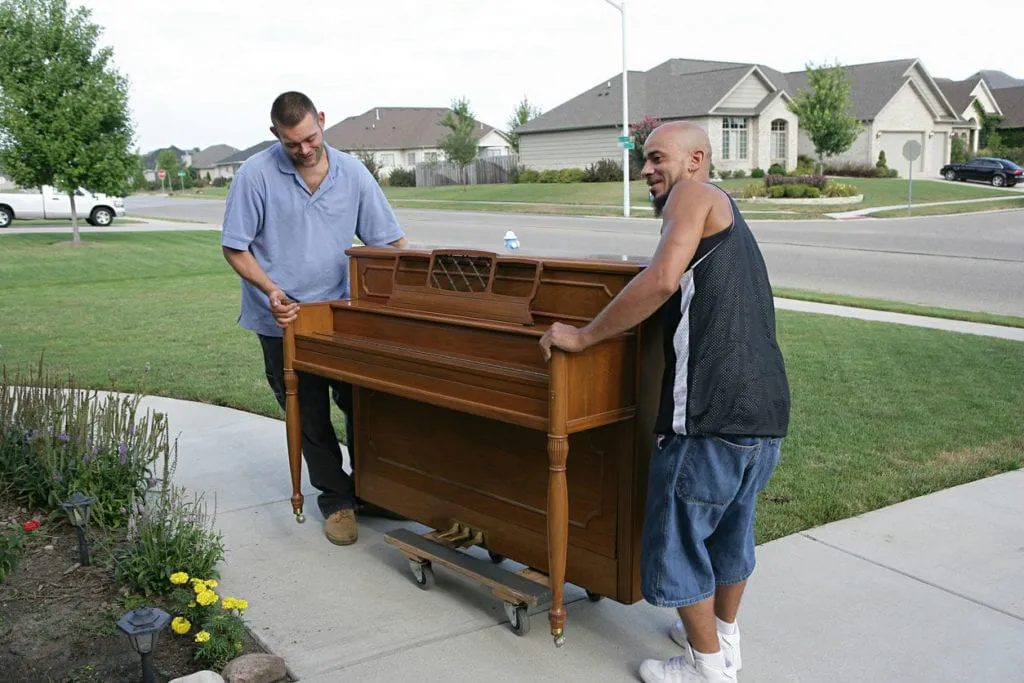
Everyone knows a piano has 88 keys but did you know that it’s common for them to have more than 10,000 moving parts? Moving such a delicate, heavy, and complicated instrument without damaging it can be difficult, and professionals are best equipped to do this safely. You can do it yourself, but it takes a bit of preparation and a lot of help.
So, when do you throw in the towel and call a professional to move your piano? We offer some tips below on how to answer that question, how much it can cost to move a piano, and if you want to do it yourself, we give you some things to check beforehand.
In this guide:
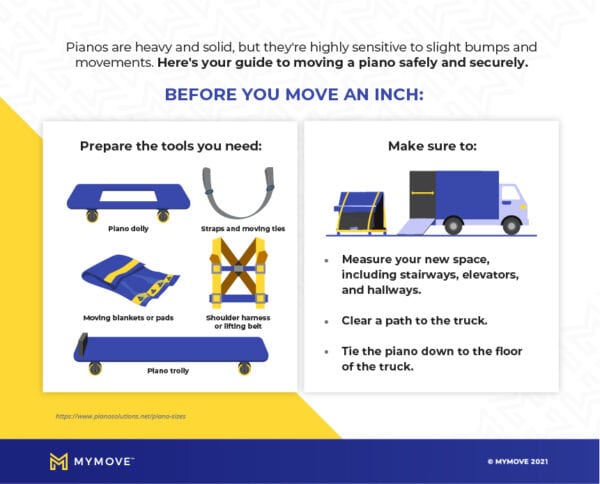 You will need, at the very least, piano dollies, straps, and padding. But the specific supplies you’ll need to get can vary based on the type of piano:
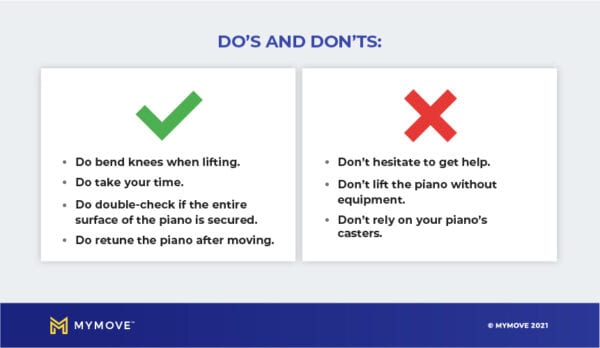 Now you know the steps to take to properly and safely move a piano yourself. Here are a few mistakes to avoid:

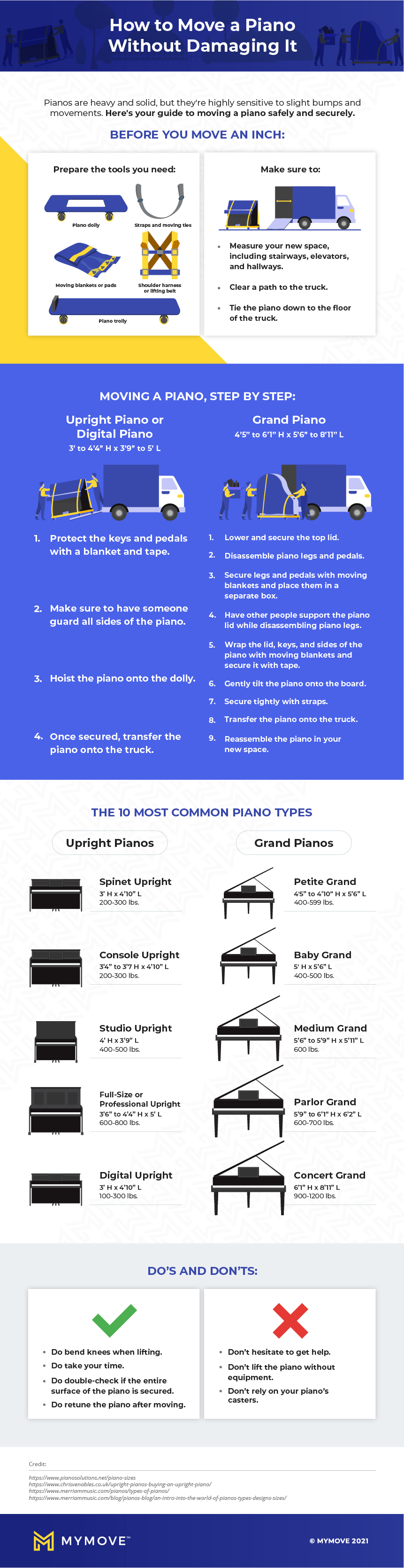 Download the full infographic here:Download
- First steps before you move a piano yourself
- What not to do when moving a piano
- The bottom line
- Infographic
- Frequently asked questions
First steps before you move a piano yourself
If you’re determined to move the piano by yourself, it's important to be prepared. You'll need the right equipment, and it's important to make sure the piano fits every step of the way. Take a look at the checklist below:1. Measure the new space.
You want to make sure your piano will fit in its new place. Measure the room, doors, and staircases to make sure there are no obstacles to getting the instrument to its new home.2. Make sure you have the right equipment for the job.
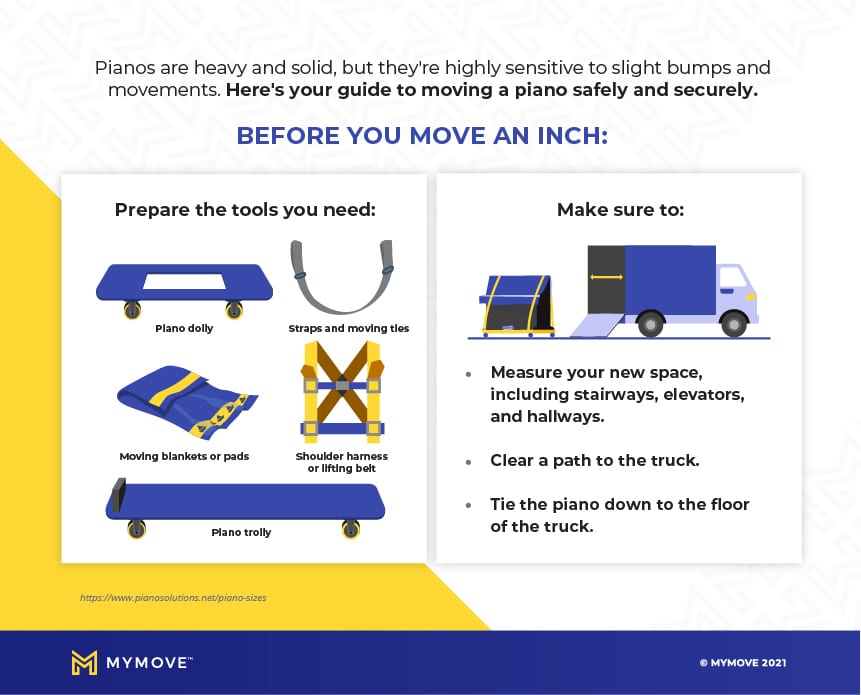 You will need, at the very least, piano dollies, straps, and padding. But the specific supplies you’ll need to get can vary based on the type of piano:
- For an upright piano: You will need piano dollies.
- For a grand piano: You will need a special piece of equipment called a piano board or piano skid board to move a grand piano. This board requires additional strapping and padding, and you should ensure that it is the right size for your piano.
3. Verify what size moving truck you’ll need.
Take an inventory of all your stuff, especially large items like your piano and other furniture, and use it to select the correct size moving truck for your move.4. Clear the paths first.
Make sure you have a clear path to the door in the place you’re moving from and from the door of your new house to the location for the piano.5. Review the path you are taking.
If you have to go up or downstairs with the piano, make sure the stairs can bear the weight of the instrument before you start your move.6. Depending on the type of piano you have, you will need to take several steps to move it:
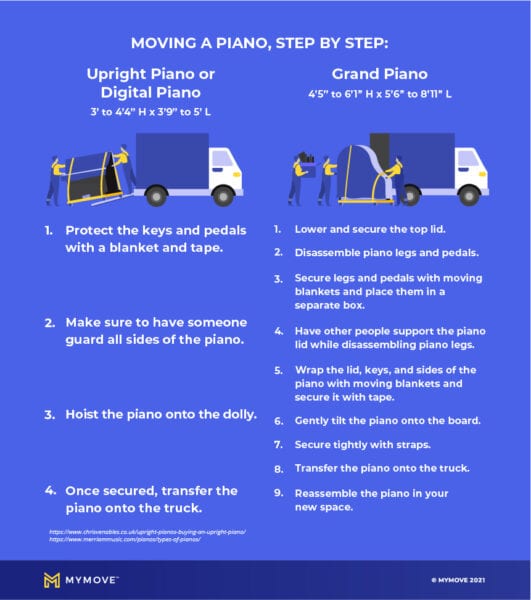
- Moving an upright piano: Make sure that the piano dollies you use are able to carry the whole weight of the piano.
- Moving a grand piano: You should remove the legs of a grand or baby grand piano before moving it. Secure the instrument to the piano board (mentioned above) with straps and a screwdriver.
7. Load the piano first in the truck and make sure it is securely tied down.
The piano should be one of the first things loaded on the truck. Secure the piano with straps and ropes to prevent movement during travel. In the graphic below, see additional steps to getting your piano safely in the truck.8. Retune the piano shortly after the move.
Moving a piano, even when everything goes well, can cause the instrument to go out of tune. Be prepared to have it tuned after the move — though many experts advise waiting a month before doing so.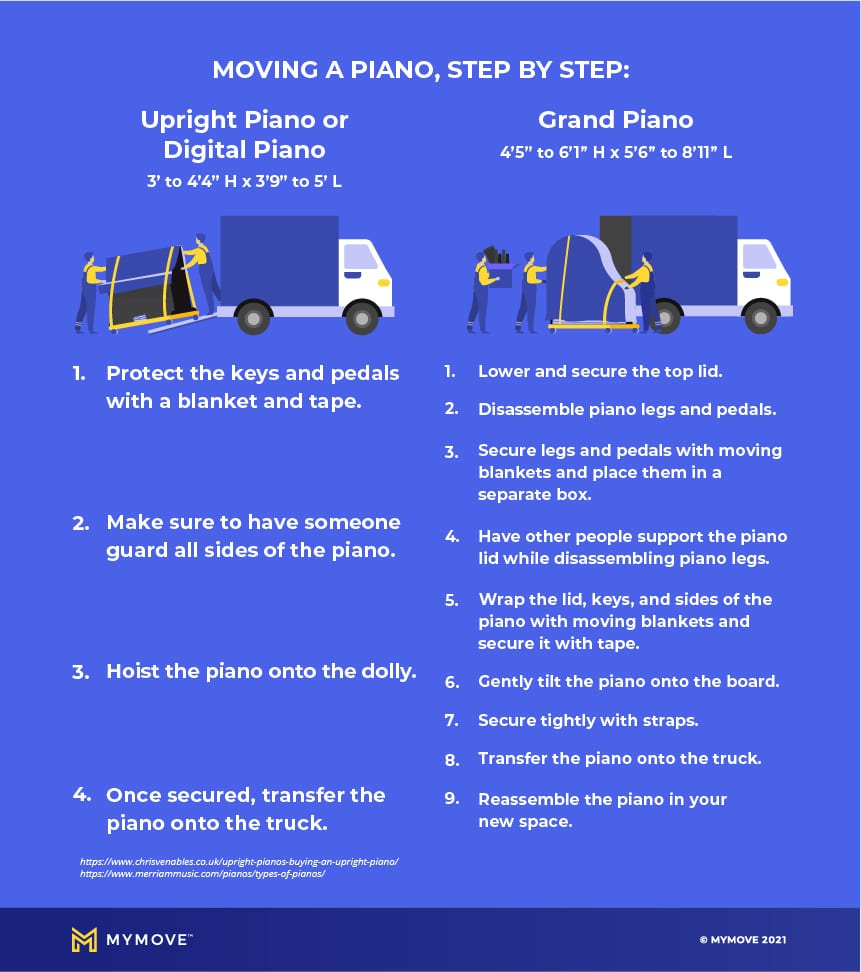
What not to do when moving a piano
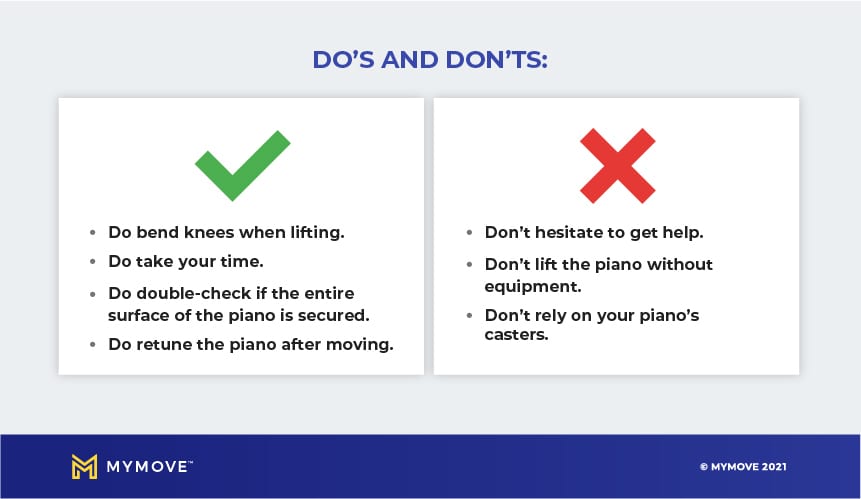 Now you know the steps to take to properly and safely move a piano yourself. Here are a few mistakes to avoid:
Don’t forget pianos are heavy.
Putting the piano on a scale to know how big the job is going to be isn’t really an option. So how do you figure out how much the piano weighs, since that weight guides the strategy you’ll use for the move as you navigate tight passageways, corners, doors, and, maybe worst of all, stairs? A piano’s weight varies greatly by the model. Grand pianos can weigh as much as 1,400 pounds or as little as 500 pounds. As for upright models, one that’s less than 48 inches high can weigh as little as 300 pounds. If your piano is 48 inches tall or more, it can weigh as much as 800 pounds. Here are the weights of some popular piano brands and styles: Upright- Young Chang 121: 496 Pounds
- Steinway & Sons Model 1098: 480 Pounds
- Bösendorfer 130: 582 Pounds
- Baldwin BH-122: 542 Pounds
- Yamaha P22: 490 Pounds
- Steinway & Sons Model K-52: 600 Pounds
- Kawai K300: 500 Pounds
- Mason & Hamlin Artist Grand Piano BB: 1,090 Pounds
- Steinway Model D Concert Grand Piano: 990 Pounds
- Steinway Model S: 540 Pounds
- Yamaha C3 Studio: 705 Pounds
- Young Chang Y185: 671 Pounds
- Mason & Hamlin CC: 1,399 Pounds
- Steinway & Sons Model B: 760 Pounds
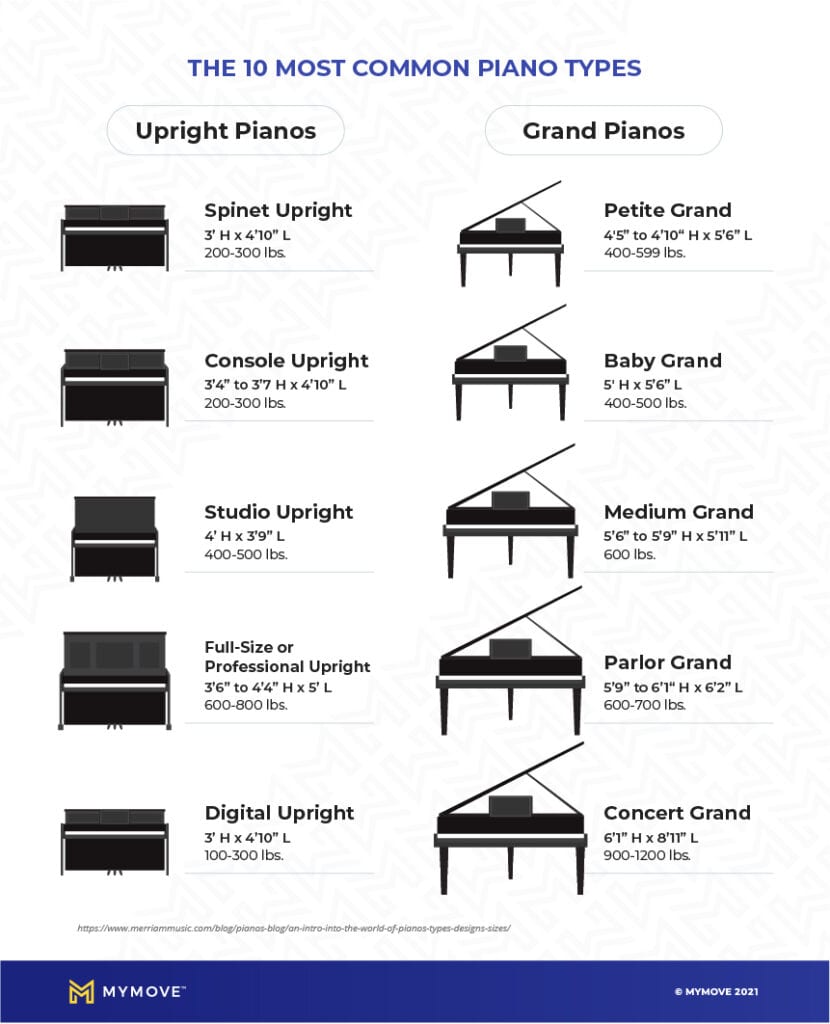
Don’t skimp on help.
Those weights are pretty daunting, so you’ll need to recruit a lot of help. Even the smallest of upright pianos will take at least three adults to get it safely from one place to another. Remember this: The consequences of dropping a piano are severe.Don’t try to lift the piano without equipment.
Make sure you use the right equipment and protection. All dollies aren’t created equal. You will need a four-wheel piano dolly, specially made piano padding, and designated piano straps tightened to the correct tension.Don’t rely on your piano’s casters (if it has them).
They’re not really made to roll great distances, and they weaken with time. And those rollers can jam, too. That can mean torn carpet and deep scratches on floors.Don’t move too fast.
Moving a piano is hard, and it shouldn’t be done in a hurry. Moving too fast can lead to making mistakes that can result in injuries to you, your helpers, your floors, your walls, and more.The bottom line on moving pianos
Whether you hire a professional piano mover or do it yourself, make sure you know all the costs and potential risks of your decision. If you use a professional mover, the cost of the move itself could be anywhere from $350 to $1,200, depending on the size of the piano, how far you’re moving it, and whether stairs are involved. Moving across country can cost as much as $3,000 and moving it internationally can be $5,000-plus. There are fewer risks of damage and injury with movers, as the professionals use the right equipment and techniques and they’ll know the best way to move your piano into its new space. It will cost less money if you do it yourself, no doubt, but there is a good chance that something might get damaged or someone might get hurt — especially if you don’t have all the right equipment. It might be best to save everyone the hard work and get someone who knows what they are doing to help you. It will save you time and possibly money (should something happen to the piano) in the long run.
Download the full infographic here:Download