10 Questions To Ask Before Buying A Safe For Your Home
 Johnrob / Getty Images
No one wants to think about the possibility of coming home to find all of their most precious processions missing. Unfortunately, whether the cause is burglary, fire, or a flood, it can happen to anyone. These occurrences are particularly scary because there isn’t any warning beforehand.
Luckily, there is a way to protect your family. Buying a safe for your home is a simple way to make sure that your valuables are protected, no matter what.
Now the question is where to start. There are a lot of safes on the market. Before you start shopping, review the questions below. They’ll help you focus on your needs and leave you feeling assured that you’ll find the right fit.
Johnrob / Getty Images
No one wants to think about the possibility of coming home to find all of their most precious processions missing. Unfortunately, whether the cause is burglary, fire, or a flood, it can happen to anyone. These occurrences are particularly scary because there isn’t any warning beforehand.
Luckily, there is a way to protect your family. Buying a safe for your home is a simple way to make sure that your valuables are protected, no matter what.
Now the question is where to start. There are a lot of safes on the market. Before you start shopping, review the questions below. They’ll help you focus on your needs and leave you feeling assured that you’ll find the right fit.
 brightstars / Getty Images
1) Which Items Will You Store?
Before you can start thinking about what kind of safe you’d like to buy, you first need to take stock of which processions are most important to you. Ask yourself: If you were to lose everything at this very moment, what would you be most upset to find missing. If you’re unsure, focus on things that are irreplaceable. Start with paperwork: Identifying documents like birth records and passports are a good bet, as is legal paperwork like a will or deeds to your property. You might also store records related to your investments, debts, or insurance policies. Beyond all those papers, you could store expensive pieces of jewelry or an external hard drive. Parents of young children could also consider using a safe to keep prescription medication and other danger substances out of their little ones’ reach.2) Which Type Of Safe Should You Choose?
Not all home safes are created equal. The items that your family chooses to store will often dictate what sort of safe will work best. Take a look at the most common options below:-
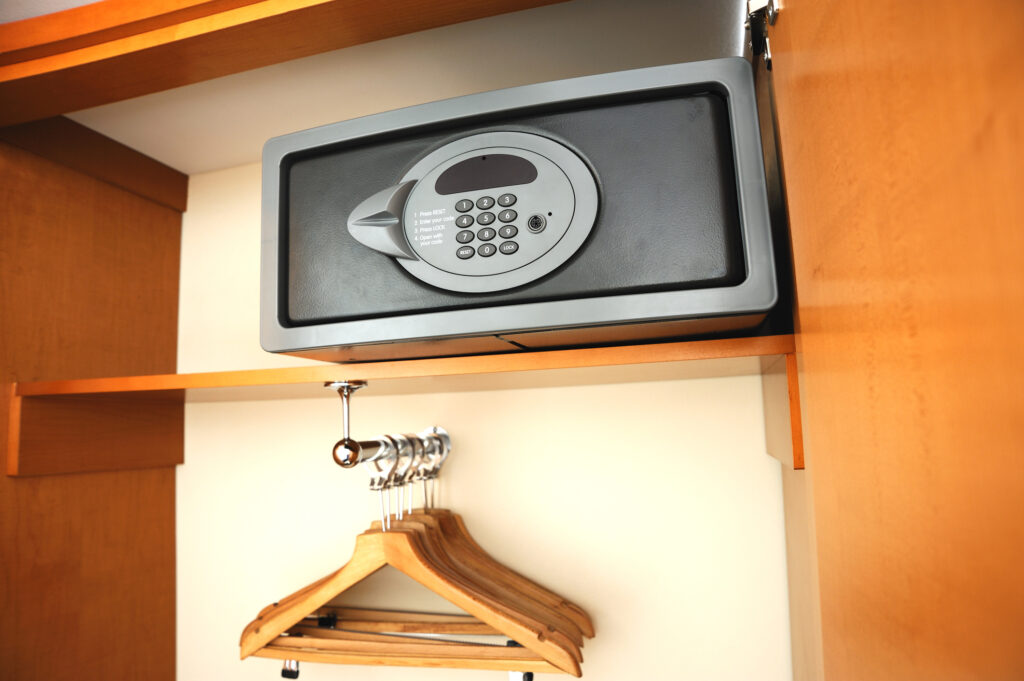
- Wall Safes: Wall safes may remind you of sleek spy flicks, but as cool as they seem, they can’t support that much weight. They work best when storing paperwork or photographs.
-
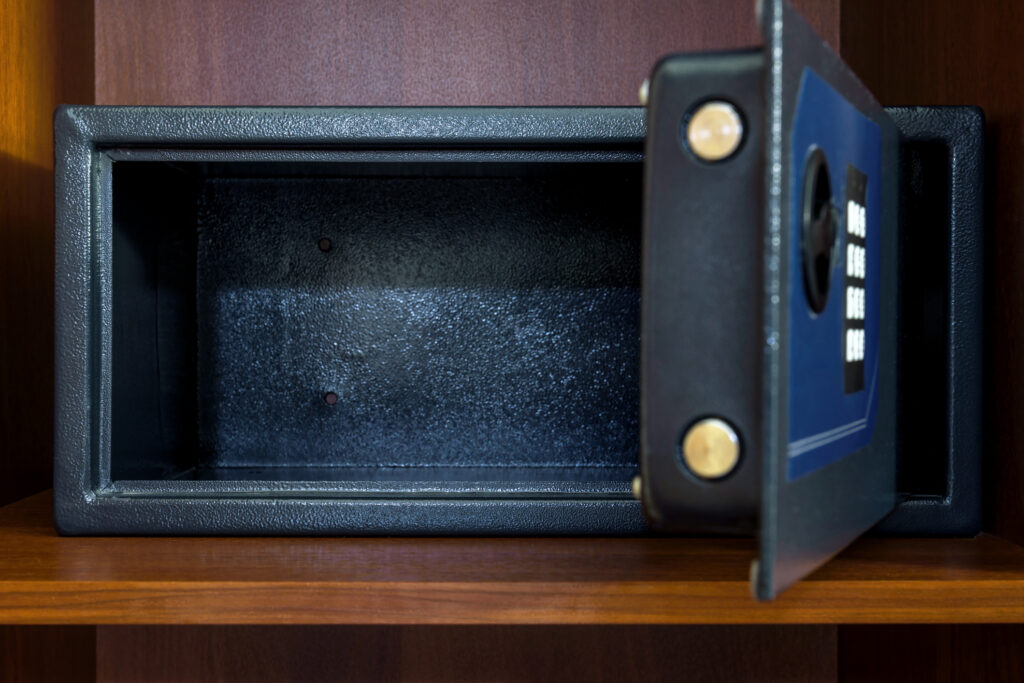
- Floor Safes: Floor safes are the most bulky option, but they will give you the most flexibility. Feel free to store your heavier items like jewelry, hard drives, or precious metals.
-
- Weapons Safes: Keep in mind that regular wall and floor safes are not suited for storing weapons. Specialty weapons safes are fitted with extra locks, pry-proof metal, and locking bolt technology to minimize risk of accidents.
 scaliger / Getty Images
3) How Much Space Do You Need?
While it may seem self-explanatory, take measurements before going shopping. Most home safes are extremely heavy and tricky to move, so the last thing you want is to bring one home only to find that it doesn’t fit where you want it. Even worse, imagine if it fit in the space, but wasn’t big enough for all your valuables. The exterior measurements are pretty easy. You need to account for the height, width, and depth. You’ll also want to measure some of your door frames and stairwells, so that you know you’ll be able to move the safe into place easily. For the interior measurements, gather your items together and start by measuring the height, width, and depth. Since most safe interiors are measured in cubic feet, you should to multiply those three numbers and divide that total by 1728 to get an accurate number for shopping. Don’t be afraid to buy a bigger safe than you currently need. Sooner or later, you’ll appreciate the room to grow.4) What Type Of Protection Do You Want?
Unfortunately, not all safes are created equal. Some offer will offer lots of protection against fire but fall down in the face of home invaders or vice versa. Before you purchase a home safe, think about what type of protection you need most. Keep in mind that, according to Consumer Reports, fire is the most common cause of asset loss, followed by burglary, and then water damage. Composite safes, or safes that offer some degree of protection against multiple types of invasion, are available. However, the levels to which the provide protection may vary greatly. Weigh each protection standard before making your decision.5) How Much Can You Spend?
It goes without saying that budget should be a consideration before any big home purchase, but especially when looking into buying a home safe. This is one situation where additional costs can add up fast, so be sure to set a price point before heading to the store. Of course, there is the cost of the safe itself. A basic model is not likely to break the bank. However, be prepared to encounter upgrades such as higher quality steel, extra locks, or additional bolting. Folks who love origination might want pay a little extra for a safe fitted with interior shelving. After you’ve decided on the model, there are often a few additional costs to consider. Some companies will offer a guarantee or warranty on their products, which can be used to cover the cost of stolen valuables, if needed. Since safes are so difficult to move, you may have to pay an additional installation cost to put yours in place.6) Where Will You Keep Your Safe?
Believe it or not, the place where you keep your valuables isn't always where your safe should be located. Think for a moment on where you typically keep your valuables - in a jewelry box, closet or under a bed. Think through your lifestyle and the layout of your home and determine which area you feel is safest. The folks at Casoro Jewelry Safes say that the master bedroom closet is the most popular location. In their opinion, the upside to this location is easy access to your assets. However, a common counter argument is that thieves are more likely to search the bedroom for expensive items. Ultimately, it’s all a matter of your personality. Are you the type who’s likely to be deterred from wearing your fine jewelry because it’s not at your fingertips? Or, are you someone who constantly worries over the possibility of a break in. If you find the master bedroom to be too much of a target, you could always consider your basement, home office, or even a crawl space under the stairs.7) Is The Safe Accredited?
Don’t just take a sales person’s word on safety. The majority of home safes will have an accreditation rating somewhere on their exterior. Accreditations by Underwriters Laboratories (UL) have grown to be the industry standard. UL tests safes against a variety of conditions – fire, burglary, - and gives them a rating based on how well and how long they withstand the trial. Safes can be accredited for different types of protection. See below for a general guide, but you can read a full account of the safety ratings on UL’s website:- Burglary and Construction Quality: Operates on a scale of B-G, where B is the weakest rating
- Fire Resistance: A numerical rating where the first number indicates temperature and the second details length of exposure in hours. (e.g. Class 350 – 4 Hr)