Flying Ants or Termites? Know the Difference
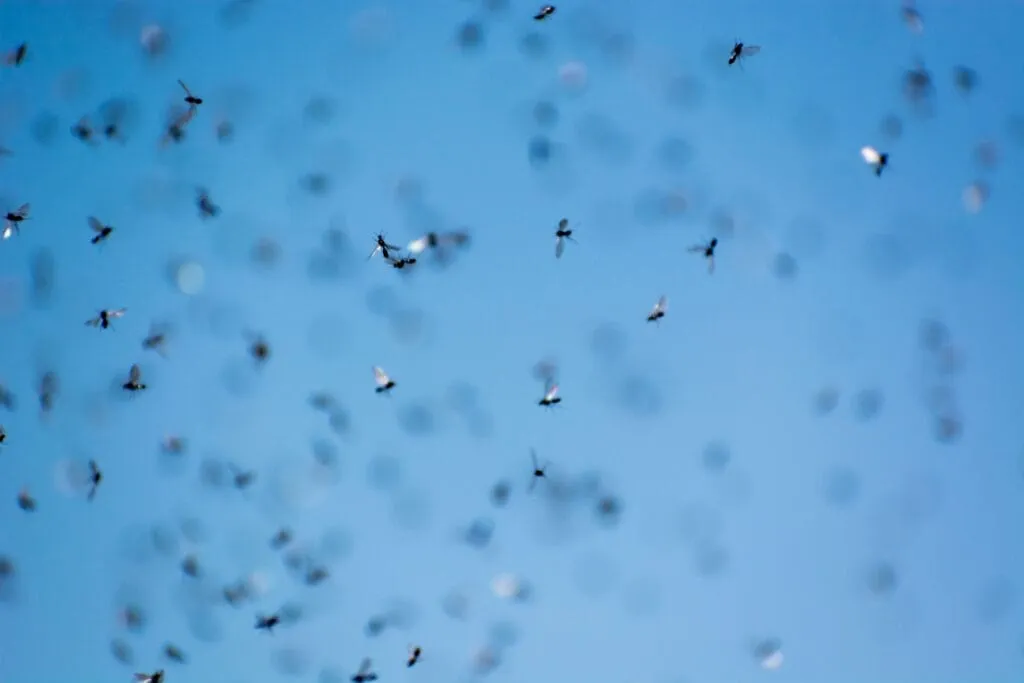
You’ve spotted the pests plaguing your home: they look like ants with wings, but what are they actually, and how do you get rid of them?
Unwanted bugs are definitely a problem you need to solve. They can harbor disease and damage your home. You could call in reinforcements: pest control specialists know their stuff and can give you some peace of mind that the critters won’t return. But if you can DIY this issue, you could save a bundle of dough, and learn the skills you need to deal with it in future years.
It doesn’t make sense to throw all your bug-zapping artillery at the intruder when a simple solution might do the trick. To know what to do, you’ve first got to name your enemy.
 Cristina Romero Palma / Shutterstock
 Pan Xunbin / Shutterstock
What are ants with wings?
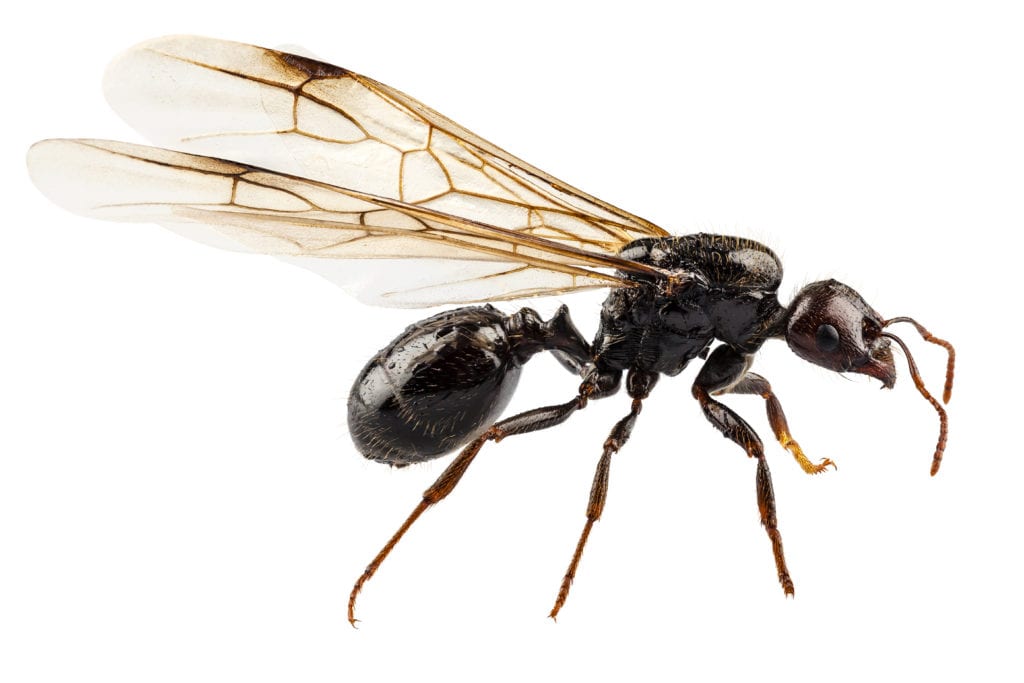
Wings emerge on almost any type of ant at certain times of the year. During these times, colonies send out swarms of reproductive males and females to find new nesting areas and procreate to form new nests. Once they’ve landed and found a new home, both males and females will shed their wings and carry on their lives. Many people don’t realize ants can grow wings because the whole episode may be over within a day or two and for many species only twice a year during spring and early fall. The ants most confused with termites are carpenter ants because they are a similar size to termites and also tunnel through wood. All ants can be a nuisance in your home, as they travel common paths in search of food all over your home. Carpenter ants even tunnel in wood, making longer paths than termites. Unlike termites, they don’t eat the wood but leave it behind as a sort of sawdust. That's not the kind of thing you need in your walls.What are termites?
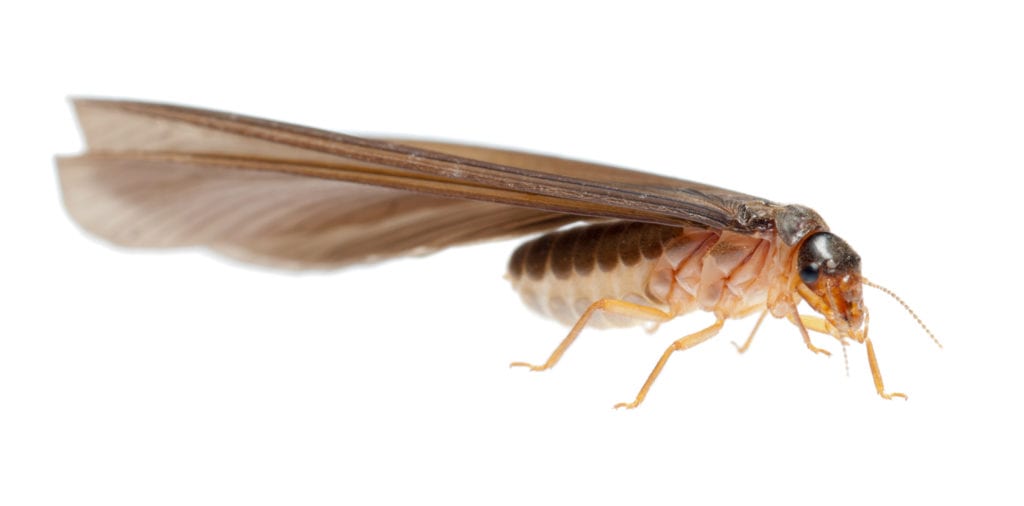
Termites are often confused with winged ants but are more likely to damage your building structures if they’re able to get in and get settled. Though they’re more common in the southern states, they can appear nearly anywhere in the U.S. They favor moist, warm environments and will often attack the wood closest to the soil. Like ants with wings, termites shed their wings once they find a good place to live. Depending on the species, they can range between 1/8 inch to 1 inch long. They are pale in color, in shades of white to light brown.Is it flying ants or termites?
How will you know if you have ants or termites? First, you can check out the damage in your home to tell which pest you have. While termites are well known for causing destruction, often, homeowners don’t know they have an infestation until they have an inspection done. One telltale sign of termites is that they sometimes leave mud tubes extending over foundation walls or sill plates. This is the protection they use when leaving an underground space until they emerge in the wood in which they plan to tunnel. Wood that is termite damaged is hollowed out in line with the grain of the wood, and may have dirt lining larger areas where the termites feed. Carpenter ants leave shavings behind as they tunnel through wood and the openings to tunnels may look like slits. If you see the ants, it’s possible they’re sneaking in through existing gaps and holes and not actually tunneling in your wood. Termites can damage even healthy, strong wood, whereas ants will stick to moist wood that may already be rotting.Ants with wings: Appearance
There are some key differences between ants and termites that will help you tell which critter you’re looking at. Ants typically have- Antennae that bend to a 90-degree angle
- A very slim waist between their middle and tail end
- Dark reddish-brown or brownish-black coloring
- Forewings that are much larger than the hind wings
Cristina Romero Palma / Shutterstock
Termites: Appearance
In contrast, if you’re looking at a termite it will likely have:- Straight antennae
- A thicker waist between thorax and abdomen
- Pale white to light brown coloring
- Forewings that are similar size to hind wings
Pan Xunbin / Shutterstock