How to Get Rid of Crabgrass Quickly and Easily

Crabgrass is a gardener’s worst nightmare. To have an impeccable yard, you need to know how to get rid of crabgrass and keep it away. This requires intentional crabgrass removal that both removes existing plants and prevents new growth.
What does crabgrass look like, what is the best crabgrass killer, and what are the top insider tips on keeping these weeds at bay? This guide will show you how to get rid of this troublesome weed and make your yard the best one on the block.
 Christian Delbert / Shutterstock
What makes crabgrass so annoying is that it can grow in practically any soil type, poison adjacent plants, and choke the growth of desirable plants. Crabgrass seeds can also remain dormant for up to three decades before sprouting and one crabgrass plant can make over 150,000 seeds in one season, which makes controlling its population a big job. On top of that, pieces of its stems can develop new roots and create more plants.
Christian Delbert / Shutterstock
What makes crabgrass so annoying is that it can grow in practically any soil type, poison adjacent plants, and choke the growth of desirable plants. Crabgrass seeds can also remain dormant for up to three decades before sprouting and one crabgrass plant can make over 150,000 seeds in one season, which makes controlling its population a big job. On top of that, pieces of its stems can develop new roots and create more plants.
What is crabgrass and why’s it so annoying?
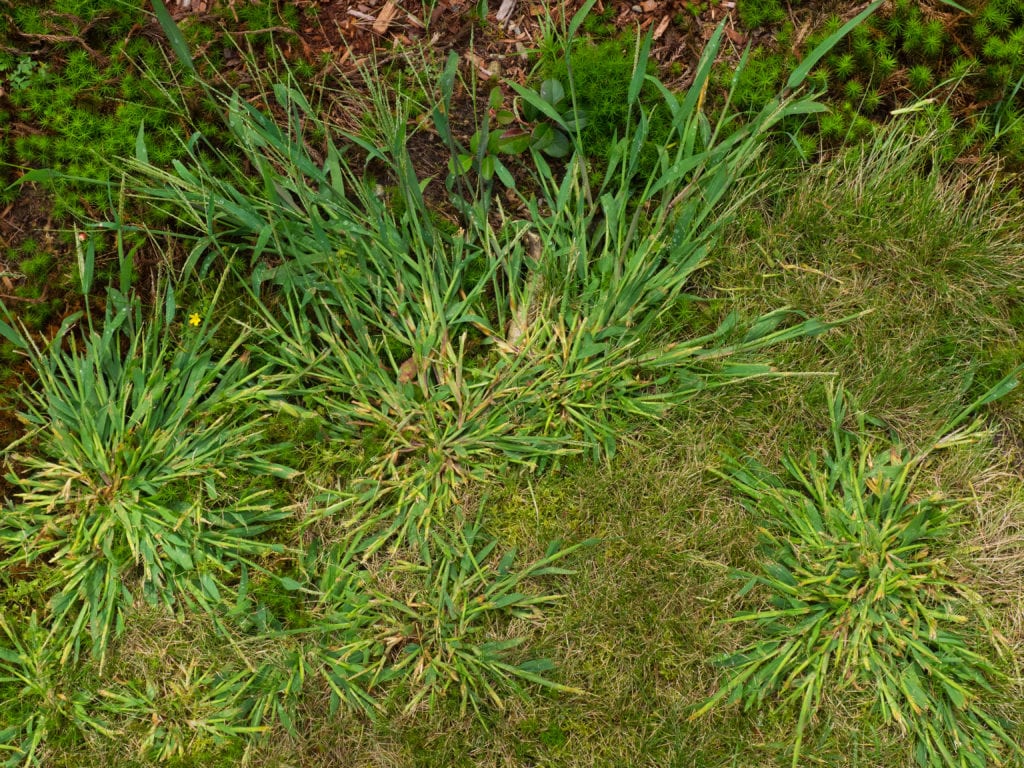
Crabgrass is an annual weed that appears during the spring and summer. It looks similar to yard grass but grows horizontally instead. It also has flatter, wider leaves that spring out from its center point. Crabgrass flowers are a series of vertical spikes that extend from the top of a stem. Christian Delbert / Shutterstock
What makes crabgrass so annoying is that it can grow in practically any soil type, poison adjacent plants, and choke the growth of desirable plants. Crabgrass seeds can also remain dormant for up to three decades before sprouting and one crabgrass plant can make over 150,000 seeds in one season, which makes controlling its population a big job. On top of that, pieces of its stems can develop new roots and create more plants.
How to get rid of crabgrass in 5 steps
- Step 1: Pull out crabgrass sprouts in the spring
- Step 2: Replant any bare areas with grass seed
- Step 3: Treat your yard with a crabgrass preventer
- Step 4: Use a post-emergent crabgrass killer
- Step 5: Reapply a pre-emergent crabgrass killer
A step-by-step guide to crabgrass removal
Step 1: Pull out crabgrass sprouts in the spring
In the spring, pull out early crabgrass sprouts before their roots can go deep into the soil. Bag these weeds to prevent the spread of new seeds.Step 2: Replant any bare areas with grass seed
Crabgrass thrives in places where there's no competition. It's harder for this weed to take root when healthy grass is already in place.Step 3: Treat your yard with a crabgrass preventer
This keeps new seeds from germinating. A good choice is Bonide Sedge Ender Nutsedge & Crabgrass Killer.Step 4: Use a post-emergent crabgrass killer
Further into the season, kill existing crabgrass with either a dual-acting or post-emergent weed killer that's made to target crabgrass. Try Roundup Ready-to-Use Extended Control Weed & Grass Killer Plus Weed Preventer.Step 5: Reapply a pre-emergent crabgrass killer
Preventative herbicide has a time limit on its effectiveness, which averages three months. Note that when you apply preventative herbicide into the soil, you should plan to reapply a new layer near the end of that three-month period. The big picture: Keep your lawn lush and healthy, because a thin lawn can have crabgrass overtake it quickly. Plant grass seeds in the fall for the best results.Products you’ll need to treat crabgrass
- Bonide Sedge Ender Nutsedge & Crabgrass Killer wipes out and prevents crabgrass seeds from germinating and also kills active weeds
- Ornamec Over-the-Top Grass Herbicide
- Bayer Advanced All-in-One Lawn Weed and Crabgrass Killer is an all-weather crabgrass killer that also targets 200 other species of broadleaf weeds and leaves the rest of the lawn intact
- Ortho Weed B Gon Weed Killer is one of the most affordable crabgrass killers that specifically targets broadleaf weeds like crabgrass but doesn’t harm grass
- Roundup Ready-to-Use Extended Control Weed & Grass Killer Plus Weed Preventer is a dual-acting crabgrass killer that destroys existing plants and also stops new seeds from taking root