Ideas to Perfect Your Landscape Edging
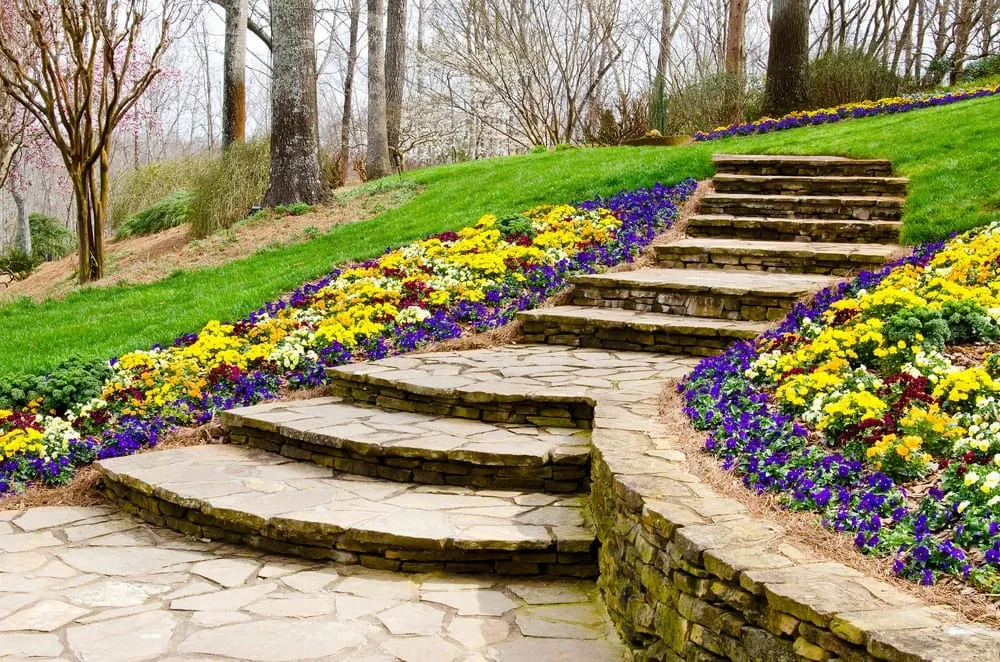
Moving to a new home may mean leaving behind a well-worked garden. The bright side is that you now have the opportunity to make the new yard all your own. Many people think of gardening as live goods — finding those just-right plants to create visual harmony. But that isn't the only part of landscaping: There are also hard goods to give your yard the lines and borders to create flowing movement. That's where landscape edging comes in.
One of the important parts of creating a garden is defining it. The best way to do this is with landscape edging, which gives your yard a crisp border. Also known as lawn edging, this added technique makes it easy to mow any grassy areas outside of your defined while also creating a clean-cut edge to the yard. Here is a list of ideal yard edging options — whether your landscape is fun or formal.
 aimful / Shutterstock
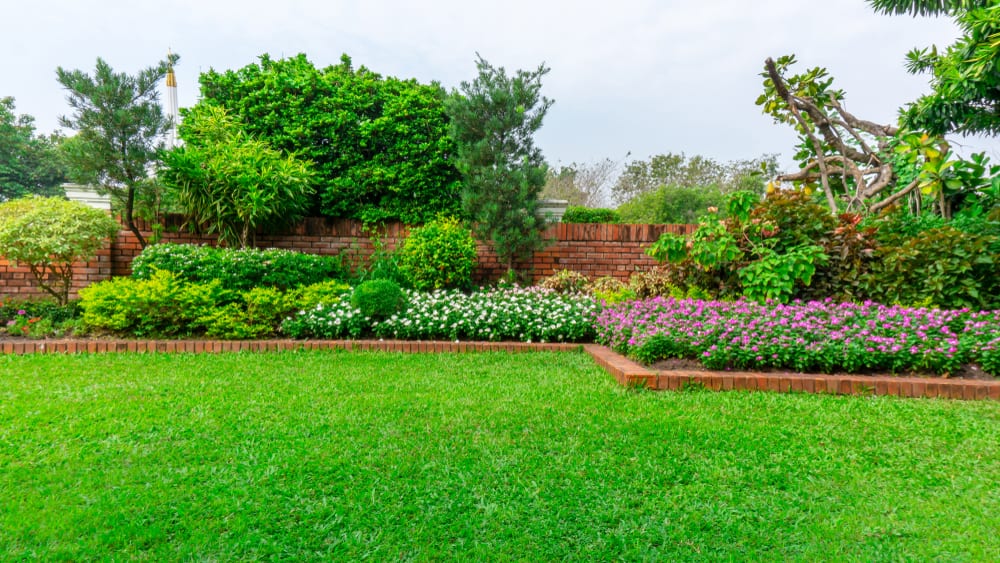
Bricks can be used in a variety of ways. You can use a flowing line of stacked bricks, which creates a tall border that delineates the plants from the rest of the yard. It also helps to keep grass out of the landscaping. Home improvement and yard stores will often carry bricks made for stacking, though they may run more expensive than regular building bricks.
aimful / Shutterstock
Bricks can be used in a variety of ways. You can use a flowing line of stacked bricks, which creates a tall border that delineates the plants from the rest of the yard. It also helps to keep grass out of the landscaping. Home improvement and yard stores will often carry bricks made for stacking, though they may run more expensive than regular building bricks.
 eag1e / Getty Images
Depending on the size and layout of your yard, you may need a thin borderline. To keep it well-defined, lay the bricks sideways and angled upward. The front of one will lay on the back of the next. A slight trench should be dug into the soil. The depth will depend on how high you want the angled bricks to rise out of the soil bed.
eag1e / Getty Images
Depending on the size and layout of your yard, you may need a thin borderline. To keep it well-defined, lay the bricks sideways and angled upward. The front of one will lay on the back of the next. A slight trench should be dug into the soil. The depth will depend on how high you want the angled bricks to rise out of the soil bed.
 RobertsGalleries / Getty Images
Laying down two layers of bricks next to each other helps to give a thicker edging. Laying one horizontally and the next vertically will make it even thicker, as well as give it a geometric and textured edge. The other positive comes in when mowing: Having the horizontal layer slightly lower or even with the grass layer keeps the mower from catching its blade. To do this, you will need to dig a wider, but only as deep as the bricks are tall when laying flat.
RobertsGalleries / Getty Images
Laying down two layers of bricks next to each other helps to give a thicker edging. Laying one horizontally and the next vertically will make it even thicker, as well as give it a geometric and textured edge. The other positive comes in when mowing: Having the horizontal layer slightly lower or even with the grass layer keeps the mower from catching its blade. To do this, you will need to dig a wider, but only as deep as the bricks are tall when laying flat.
 JenniferPhotographyImaging / Getty Images
Keeping it simple is always a good idea as well. Dig a shallow trench, then lay the bricks in with the dirt pushed up around them. To give it a little more character, fill in the edges and gaps with concrete.
JenniferPhotographyImaging / Getty Images
Keeping it simple is always a good idea as well. Dig a shallow trench, then lay the bricks in with the dirt pushed up around them. To give it a little more character, fill in the edges and gaps with concrete.
 dowell / Getty Images
A simple and thin line of metal can go a long way to add dimension to your landscaping. Simply push the metal lining into the edge of your beds, and fill the space with soil or rocks. It creates a thin demarcation but does the job of keeping materials separate.
dowell / Getty Images
A simple and thin line of metal can go a long way to add dimension to your landscaping. Simply push the metal lining into the edge of your beds, and fill the space with soil or rocks. It creates a thin demarcation but does the job of keeping materials separate.
 bluejava1 / Shutterstock
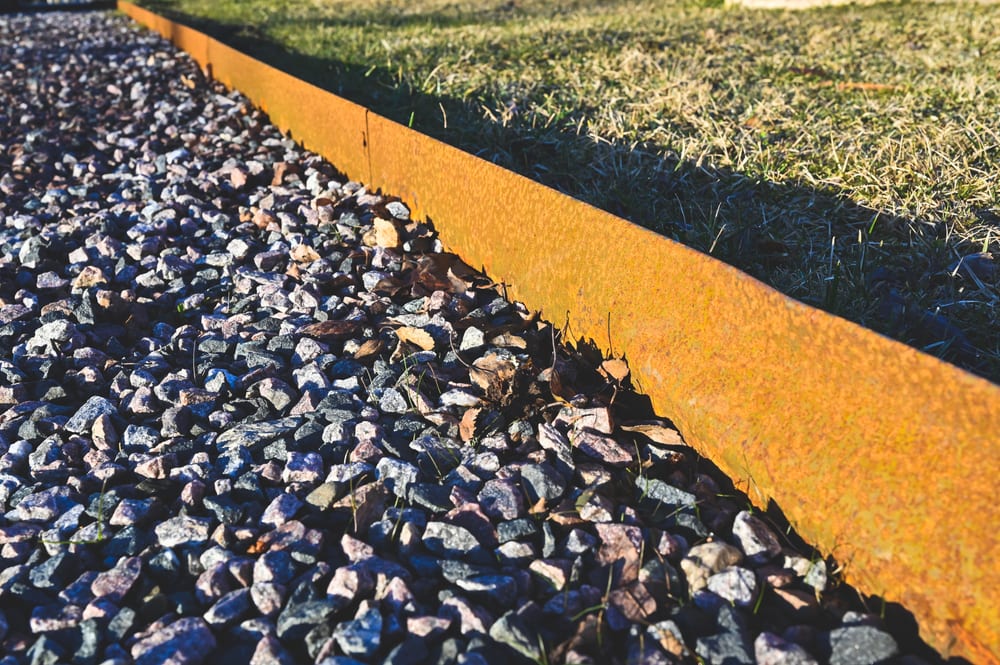
A clean-cut and new-metal look isn't always the way to go. But using metal that's been purposefully and carefully rusted over gives the garden edging a rustic, weathered look. There are different heights of this material to give your garden as much definition as you desire.
bluejava1 / Shutterstock
A clean-cut and new-metal look isn't always the way to go. But using metal that's been purposefully and carefully rusted over gives the garden edging a rustic, weathered look. There are different heights of this material to give your garden as much definition as you desire.
 aimful / Shutterstock
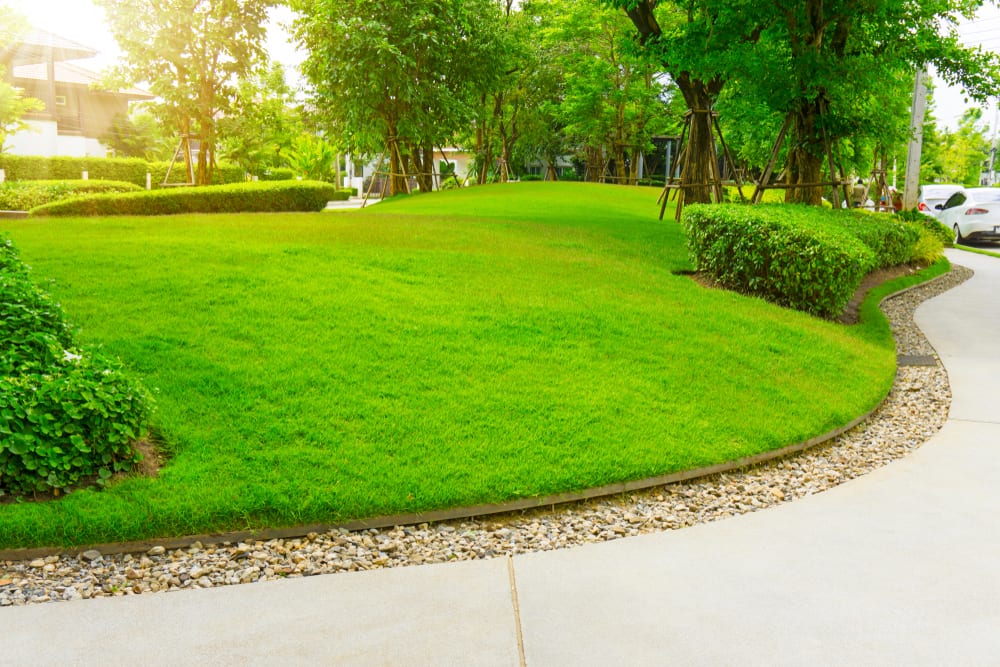
Your flower beds aren't the only feature in your yard that can benefit from the extra definition. Using flexible steel edging, create strong lines in your yard and build up one area to give it visual interest. You can also do this when building a new garden. Raise the soil level to the desired height and create the appearance of a raised bed.
aimful / Shutterstock
Your flower beds aren't the only feature in your yard that can benefit from the extra definition. Using flexible steel edging, create strong lines in your yard and build up one area to give it visual interest. You can also do this when building a new garden. Raise the soil level to the desired height and create the appearance of a raised bed.
 Aleksander Karpenko / Shutterstock
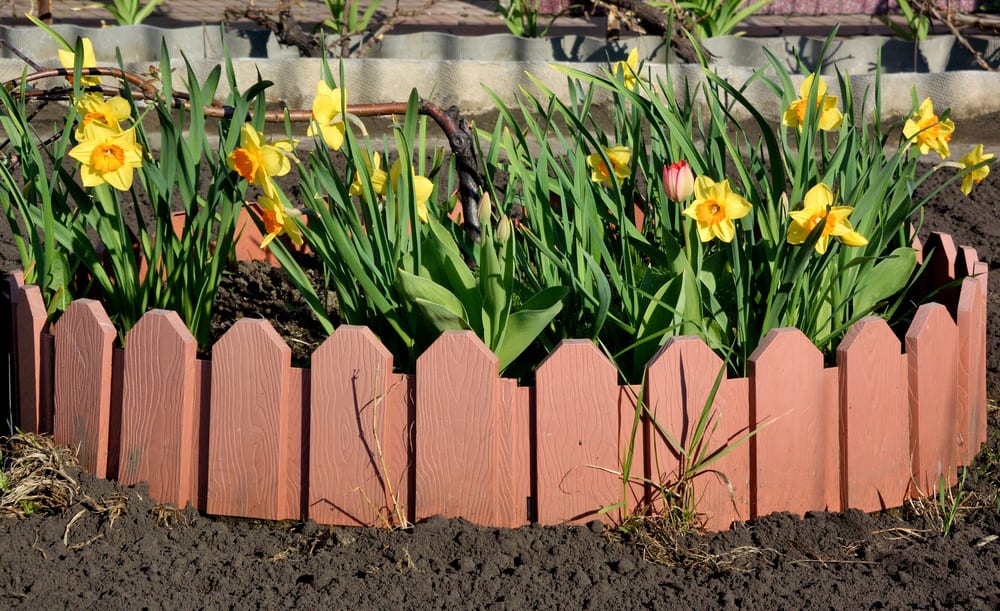
Using recycled pallets is a cheap option for edging, and it cuts down on waste! Using recycled pallets is easy: Split them apart and cut them up. Make sections of different lengths for a more wild feel, or cut them evenly for a more refined look. The different shades of wood often found on pallets also gives great visual appeal.
Aleksander Karpenko / Shutterstock
Using recycled pallets is a cheap option for edging, and it cuts down on waste! Using recycled pallets is easy: Split them apart and cut them up. Make sections of different lengths for a more wild feel, or cut them evenly for a more refined look. The different shades of wood often found on pallets also gives great visual appeal.
 Antoninapotapenko / Getty Images
Keep it classy with stained wood! This option can be laid flat or put up vertically; either way, it's easy to install. However, the stain does fade with age when used outdoors. Slow this down by buying a stain meant for outdoor wear, and know that you may need to redo it every 3–5 years.
Antoninapotapenko / Getty Images
Keep it classy with stained wood! This option can be laid flat or put up vertically; either way, it's easy to install. However, the stain does fade with age when used outdoors. Slow this down by buying a stain meant for outdoor wear, and know that you may need to redo it every 3–5 years.
 Liudmyla Guniavaia / Shutterstock
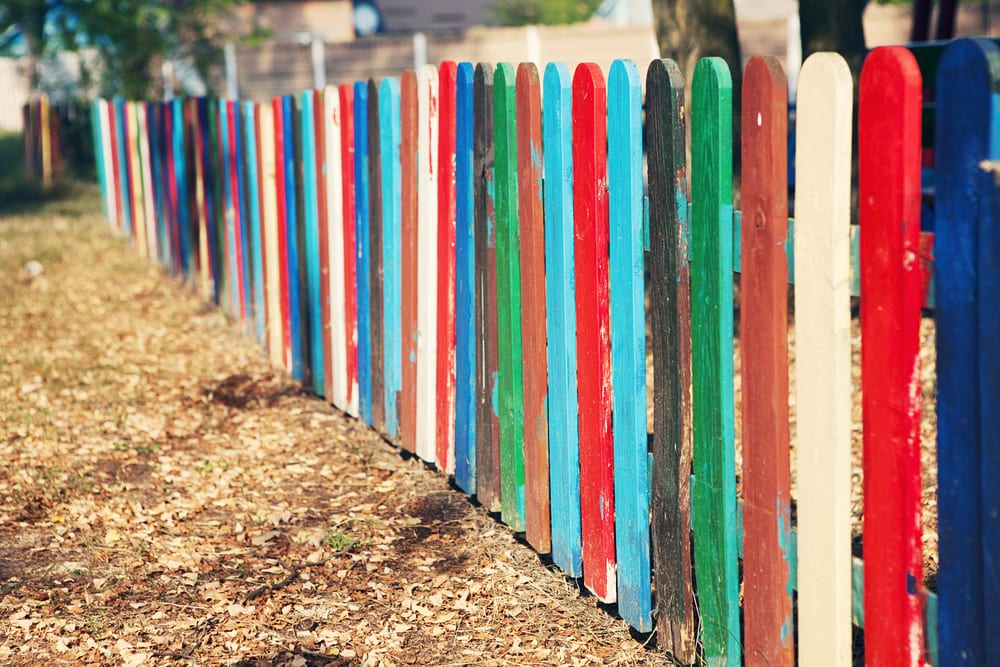
This is a fun one to make with kids. Collecting small-to-medium pieces of wood and painting them wild colors is a great bonding experience. Who wouldn't have fun making a garden even brighter before? Bonus: can be a very inexpensive option.
Liudmyla Guniavaia / Shutterstock
This is a fun one to make with kids. Collecting small-to-medium pieces of wood and painting them wild colors is a great bonding experience. Who wouldn't have fun making a garden even brighter before? Bonus: can be a very inexpensive option.
 FotoHelin / Shutterstock
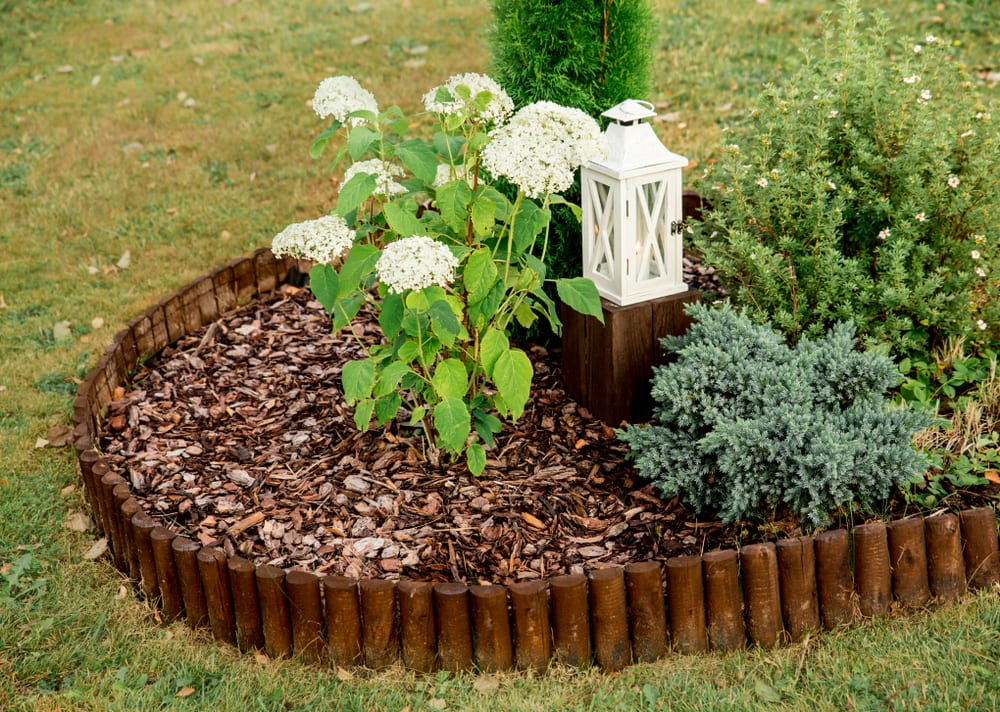
Depending on where you live, this option might be easy to achieve by simply doing some trimming. It is also very convenient if you have a tree that needs to come down. As long as the branches weren't rotting, this will last for a long time. (No trees? Pieces like these can also be purchased.)
FotoHelin / Shutterstock
Depending on where you live, this option might be easy to achieve by simply doing some trimming. It is also very convenient if you have a tree that needs to come down. As long as the branches weren't rotting, this will last for a long time. (No trees? Pieces like these can also be purchased.)
 JanJBrand / Getty Images
This option mostly comes down to your DIY prowess. Connected boards can be purchased to give your garden a quaint look. However, these are also easy to piece together. It doesn't need to look clean-cut either: Having some gaps and altering widths of logs will lend it a rustic air.
JanJBrand / Getty Images
This option mostly comes down to your DIY prowess. Connected boards can be purchased to give your garden a quaint look. However, these are also easy to piece together. It doesn't need to look clean-cut either: Having some gaps and altering widths of logs will lend it a rustic air.
 topseller / Shutterstock
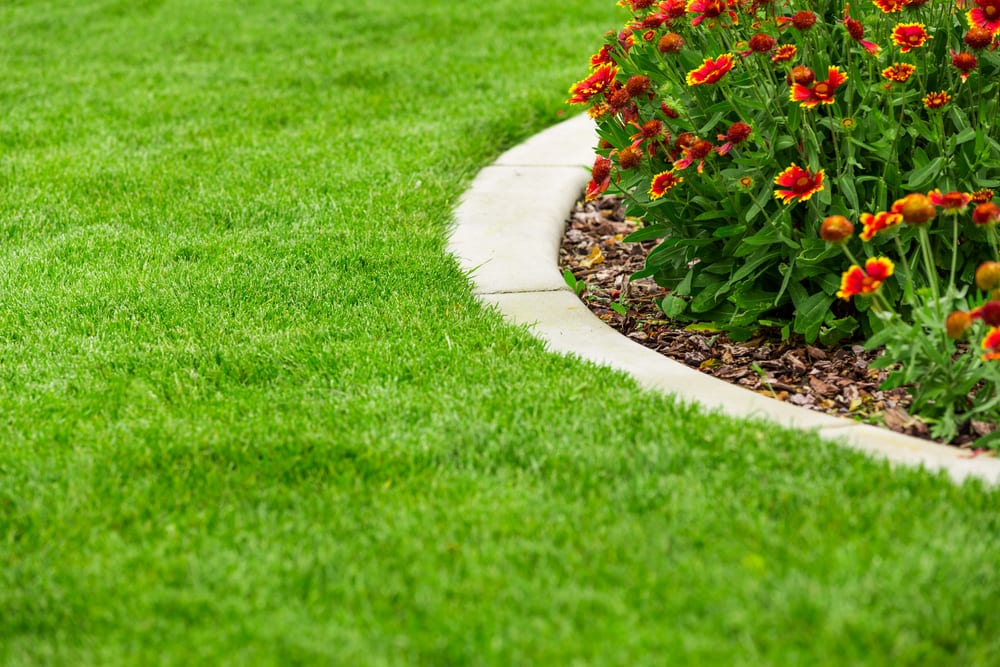
Another simple and inexpensive option is to use concrete forms and flat lines. Sticking some forms in the ground, pouring the concrete in, and leveling it out makes for a modern look. Lines can be drawn in at whatever interval you want to give it a uniform appearance.
topseller / Shutterstock
Another simple and inexpensive option is to use concrete forms and flat lines. Sticking some forms in the ground, pouring the concrete in, and leveling it out makes for a modern look. Lines can be drawn in at whatever interval you want to give it a uniform appearance.
 Liyao Xie / Getty Images
This method uses concrete that will come out resembling a curb, like that along the edge of a road. This gives you a high edge to keep dirt and plants inside. This makes the edging thicker and more defined, without getting in the way of a mower.
Liyao Xie / Getty Images
This method uses concrete that will come out resembling a curb, like that along the edge of a road. This gives you a high edge to keep dirt and plants inside. This makes the edging thicker and more defined, without getting in the way of a mower.
 Bespaliy / Shutterstock
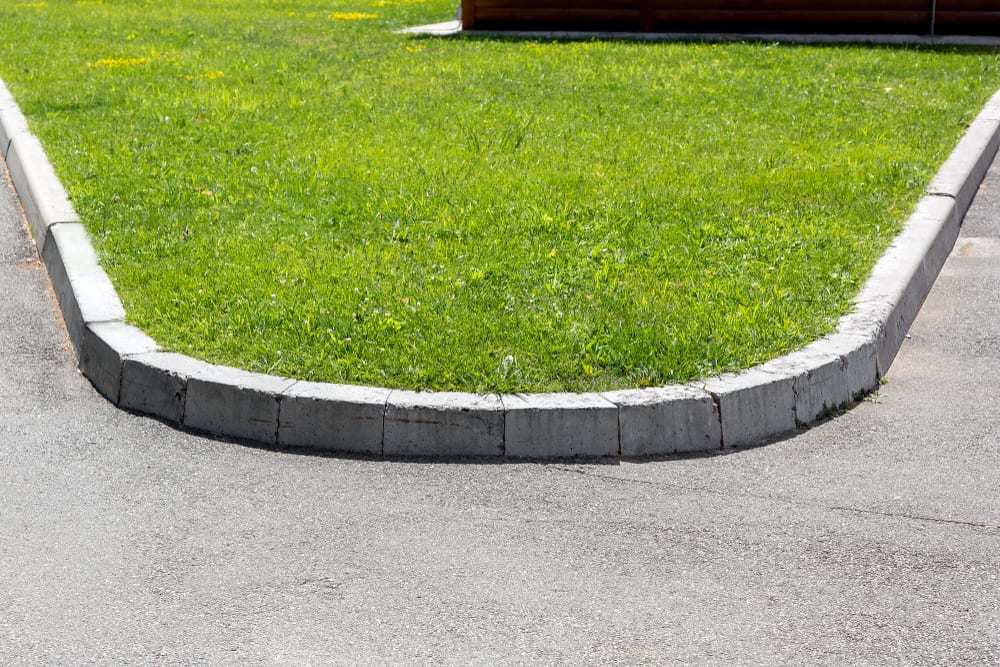
Concrete moldings come in many shapes and sizes, giving you the ability to DIY your concrete edging. It helps to keep the cost down and allows you to add creative texture to your edging. The molding can give a fun shape or etched-in lines and designs to bring a more original feel to it.
Bespaliy / Shutterstock
Concrete moldings come in many shapes and sizes, giving you the ability to DIY your concrete edging. It helps to keep the cost down and allows you to add creative texture to your edging. The molding can give a fun shape or etched-in lines and designs to bring a more original feel to it.
 alejandrophotography / Getty Images
Creating borderlines by stacking pieces of shale on top of each other gives the yard a natural, secret garden-type feeling. The shale will most likely need to be purchased, which may make this option more expensive than others.
alejandrophotography / Getty Images
Creating borderlines by stacking pieces of shale on top of each other gives the yard a natural, secret garden-type feeling. The shale will most likely need to be purchased, which may make this option more expensive than others.
 David Papazian / Getty Images
This is a rustic and more natural look for the garden. Depending on where you live, rocks can be collected from country fields where farmers have stacked them to get them away from their machines. Buying them will bring the price of the project up. However, the level of work is minimal, as larger or medium-sized rocks don't need to be dug in.
David Papazian / Getty Images
This is a rustic and more natural look for the garden. Depending on where you live, rocks can be collected from country fields where farmers have stacked them to get them away from their machines. Buying them will bring the price of the project up. However, the level of work is minimal, as larger or medium-sized rocks don't need to be dug in.
 cgbaldauf / Getty Images
If you have a forested or stream area near you, you may be able to collect river rock of all sizes to put into your border. If you can't find it on your next nature stroll, you can buy it (it's generally inexpensive).
cgbaldauf / Getty Images
If you have a forested or stream area near you, you may be able to collect river rock of all sizes to put into your border. If you can't find it on your next nature stroll, you can buy it (it's generally inexpensive).
 Irina Selina / Getty Images
While landscaping, don't feel like you always have to stay inside the lines. Rocks are especially good for creating geometric designs with your edging. Making waves or flowing lines in the ground can help give an arid garden some more appeal.
Irina Selina / Getty Images
While landscaping, don't feel like you always have to stay inside the lines. Rocks are especially good for creating geometric designs with your edging. Making waves or flowing lines in the ground can help give an arid garden some more appeal.
 ThreeDiCube / Getty Images
Using other plants to give an edge to an established garden is a way to create a natural flow between spaces without harsh lines. Make sure to use plants that are not taller than the plants behind them, and keep in mind the need for mowing along grass edges as well. Another way to do this is to fill metal tubing up with stones and add in some colorful succulents.
ThreeDiCube / Getty Images
Using other plants to give an edge to an established garden is a way to create a natural flow between spaces without harsh lines. Make sure to use plants that are not taller than the plants behind them, and keep in mind the need for mowing along grass edges as well. Another way to do this is to fill metal tubing up with stones and add in some colorful succulents.
 Sanya Muangkotr / Shutterstock
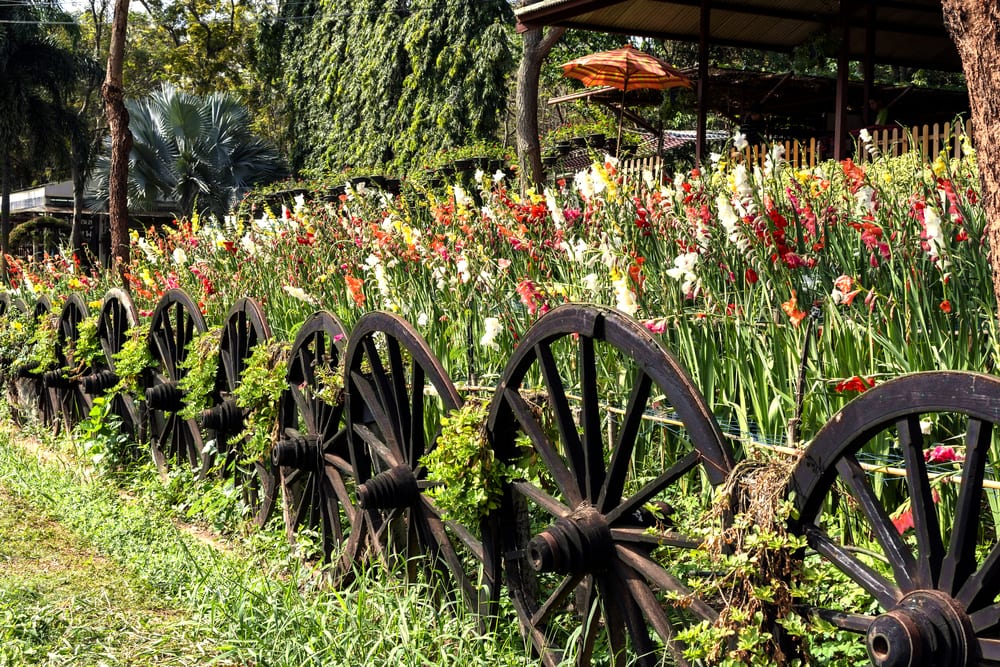
There are so many ways to recycle objects and use them to create a unique border. Using recycled bottles is a great example of this. If you have a lot of clay pots on hand, dig them into the soil and use them all up. You can also use old tires filled with dirt and plants to give a distinct edge.
Sanya Muangkotr / Shutterstock
There are so many ways to recycle objects and use them to create a unique border. Using recycled bottles is a great example of this. If you have a lot of clay pots on hand, dig them into the soil and use them all up. You can also use old tires filled with dirt and plants to give a distinct edge.
Garden edging with brick
1. Stacked bricks
aimful / Shutterstock
Bricks can be used in a variety of ways. You can use a flowing line of stacked bricks, which creates a tall border that delineates the plants from the rest of the yard. It also helps to keep grass out of the landscaping. Home improvement and yard stores will often carry bricks made for stacking, though they may run more expensive than regular building bricks.
2. Lay the bricks sideways
eag1e / Getty Images
Depending on the size and layout of your yard, you may need a thin borderline. To keep it well-defined, lay the bricks sideways and angled upward. The front of one will lay on the back of the next. A slight trench should be dug into the soil. The depth will depend on how high you want the angled bricks to rise out of the soil bed.
3. Create texture
RobertsGalleries / Getty Images
Laying down two layers of bricks next to each other helps to give a thicker edging. Laying one horizontally and the next vertically will make it even thicker, as well as give it a geometric and textured edge. The other positive comes in when mowing: Having the horizontal layer slightly lower or even with the grass layer keeps the mower from catching its blade. To do this, you will need to dig a wider, but only as deep as the bricks are tall when laying flat.
4. Flat borderline
JenniferPhotographyImaging / Getty Images
Keeping it simple is always a good idea as well. Dig a shallow trench, then lay the bricks in with the dirt pushed up around them. To give it a little more character, fill in the edges and gaps with concrete.
Garden edging with metal
5. Thin yet defined
dowell / Getty Images
A simple and thin line of metal can go a long way to add dimension to your landscaping. Simply push the metal lining into the edge of your beds, and fill the space with soil or rocks. It creates a thin demarcation but does the job of keeping materials separate.
6. The rustic look
bluejava1 / Shutterstock
A clean-cut and new-metal look isn't always the way to go. But using metal that's been purposefully and carefully rusted over gives the garden edging a rustic, weathered look. There are different heights of this material to give your garden as much definition as you desire.
7. Yard layering
aimful / Shutterstock
Your flower beds aren't the only feature in your yard that can benefit from the extra definition. Using flexible steel edging, create strong lines in your yard and build up one area to give it visual interest. You can also do this when building a new garden. Raise the soil level to the desired height and create the appearance of a raised bed.
Garden edging with wood
8. Recycled pallets
Aleksander Karpenko / Shutterstock
Using recycled pallets is a cheap option for edging, and it cuts down on waste! Using recycled pallets is easy: Split them apart and cut them up. Make sections of different lengths for a more wild feel, or cut them evenly for a more refined look. The different shades of wood often found on pallets also gives great visual appeal.
9. Stained wood edging
Antoninapotapenko / Getty Images
Keep it classy with stained wood! This option can be laid flat or put up vertically; either way, it's easy to install. However, the stain does fade with age when used outdoors. Slow this down by buying a stain meant for outdoor wear, and know that you may need to redo it every 3–5 years.
10. Painted and textured
Liudmyla Guniavaia / Shutterstock
This is a fun one to make with kids. Collecting small-to-medium pieces of wood and painting them wild colors is a great bonding experience. Who wouldn't have fun making a garden even brighter before? Bonus: can be a very inexpensive option.
11. Tree branches
FotoHelin / Shutterstock
Depending on where you live, this option might be easy to achieve by simply doing some trimming. It is also very convenient if you have a tree that needs to come down. As long as the branches weren't rotting, this will last for a long time. (No trees? Pieces like these can also be purchased.)
12. Lincoln logs quaint
JanJBrand / Getty Images
This option mostly comes down to your DIY prowess. Connected boards can be purchased to give your garden a quaint look. However, these are also easy to piece together. It doesn't need to look clean-cut either: Having some gaps and altering widths of logs will lend it a rustic air.
Garden edging with concrete
13. Simple concrete flatlines
topseller / Shutterstock
Another simple and inexpensive option is to use concrete forms and flat lines. Sticking some forms in the ground, pouring the concrete in, and leveling it out makes for a modern look. Lines can be drawn in at whatever interval you want to give it a uniform appearance.
14. Curbed edging
Liyao Xie / Getty Images
This method uses concrete that will come out resembling a curb, like that along the edge of a road. This gives you a high edge to keep dirt and plants inside. This makes the edging thicker and more defined, without getting in the way of a mower.
15. Molded concrete
Bespaliy / Shutterstock
Concrete moldings come in many shapes and sizes, giving you the ability to DIY your concrete edging. It helps to keep the cost down and allows you to add creative texture to your edging. The molding can give a fun shape or etched-in lines and designs to bring a more original feel to it.
Garden edging with stone and rock
16. Stacked shale
alejandrophotography / Getty Images
Creating borderlines by stacking pieces of shale on top of each other gives the yard a natural, secret garden-type feeling. The shale will most likely need to be purchased, which may make this option more expensive than others.
17. Large rock border
David Papazian / Getty Images
This is a rustic and more natural look for the garden. Depending on where you live, rocks can be collected from country fields where farmers have stacked them to get them away from their machines. Buying them will bring the price of the project up. However, the level of work is minimal, as larger or medium-sized rocks don't need to be dug in.
18. River rock
cgbaldauf / Getty Images
If you have a forested or stream area near you, you may be able to collect river rock of all sizes to put into your border. If you can't find it on your next nature stroll, you can buy it (it's generally inexpensive).
19. Rock in style
Irina Selina / Getty Images
While landscaping, don't feel like you always have to stay inside the lines. Rocks are especially good for creating geometric designs with your edging. Making waves or flowing lines in the ground can help give an arid garden some more appeal.
Creative garden edging examples
20. Other plants
ThreeDiCube / Getty Images
Using other plants to give an edge to an established garden is a way to create a natural flow between spaces without harsh lines. Make sure to use plants that are not taller than the plants behind them, and keep in mind the need for mowing along grass edges as well. Another way to do this is to fill metal tubing up with stones and add in some colorful succulents.
21. Recycled edging
Sanya Muangkotr / Shutterstock
There are so many ways to recycle objects and use them to create a unique border. Using recycled bottles is a great example of this. If you have a lot of clay pots on hand, dig them into the soil and use them all up. You can also use old tires filled with dirt and plants to give a distinct edge.