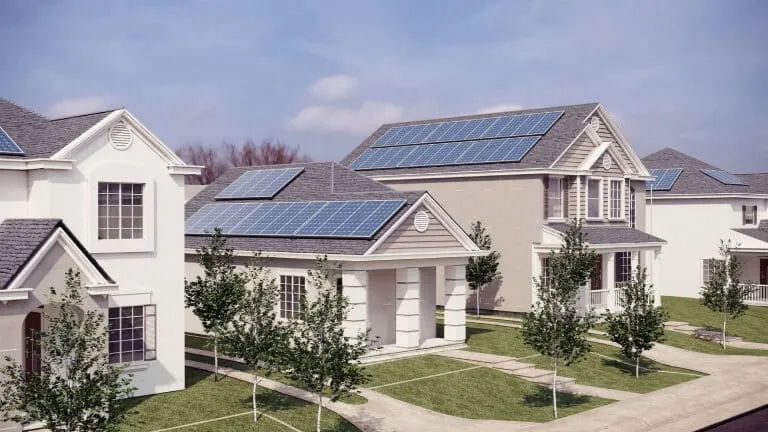
Residential solar installation is becoming more popular every year due to the rising cost of electricity and the need for sustainable energy sources. Solar panel installation is a long-term investment, that can come with some serious benefits:
Save money on your energy bill and contribute to the power grid
Federal tax credit (up to 30% of the cost of a PV solar system)
However, be aware that solar panel installation is a home improvement project that requires a significant investment of time and money, but it’s one that could yield huge rewards in the long run.Here are a few things you need to know to help you decide if going solar is the right move for your home.
Jump to:
Is your location optimal for solar?
sl-f / GettyOne of the best things about solar is that it works everywhere. But even though solar technically works everywhere, the cost-saving benefits you’ll receive vary by state. Each state sets its own laws and rules for solar panel installation, including how much renewable energy the state requires utility companies to buy, how much money you can save for each kilowatt-hour of solar energy, and whether you can pay for your solar panel installation costs over time, or are responsible for the entire amount up front. To get the most out of a solar investment, it’s important to know that certain states have better conditions for solar than others. If you’re moving to or currently live in a state with high electricity rates and a sunny climate, you’re more likely to see a quicker return on investment, versus living somewhere with cheaper electricity rates and a cloudier climate. Certain states also offer more solar incentives than others. Check your states’s official website for information about solar incentives in your state. Some of the top states for solar energy are:
California
Arizona
New Jersey
Massachusetts
New York
Texas
Hawaii
Florida
Note: The state of California’s new net metering policy (NEM 3.0), which reduces the amount of money you earn by sending solar power back to the grid, will go into effect April 15th, 2023. Anyone who installs and applies for permission to operate their solar system by April 14, 2023 is locked into NEM 2.0 rates and will not be affected by NEM 3.0.
Can you afford solar?
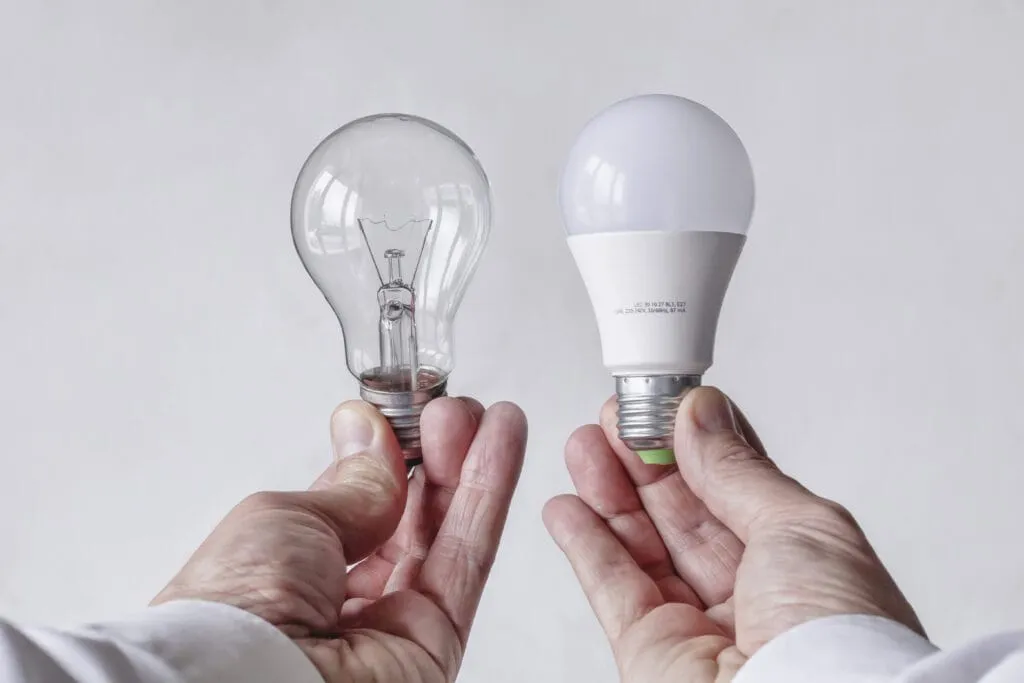
There’s no getting around the fact that solar installation is expensive. The average cost of a home solar panel system, without any tax incentives, $31,558. If you’re considering switching to solar power, you may want to first figure out how much energy is currently needed to power your home and look for cost-effective ways to reduce that energy before committing to solar. A kilowatt-hour saved is kilowatt-hour earned, and you may find that reducing your usage before installing solar is much less expensive than paying for more panels.Your state might even have a public program to help you audit your home energy usage, replace old light bulbs with more efficient ones, and look for abnormal spikes in usage that can indicate problems with wiring. Your utility company might also offer rebates to help you purchase energy-efficient modern appliances that operate using much less electricity than older models.After you’ve taken these energy-saving measures, give yourself a couple of months to compare average usage to past years. How much electricity you need is an important measure of how much solar power you’ll need to generate.
Pros of solar panels
sl-f / Getty
Save on monthly electric bill
Everyone can agree that the dreaded monthly electric bill is the last thing you want to see when you open the mailbox - especially if your state charges higher electricity rates. Solar panels can save you money on electricity, but the exact savings you’ll see is dependent on a few factors:
Whether you choose to purchase or lease your solar system
Solar is a good long-term, energy-efficient and sustainable investment that comes with big cost-saving benefits. But again, the amount you’ll save mainly comes down to your location, energy consumption, and how long you plan to stay in your home. The best way to see how much you’ll save with solar is by getting an accurate estimate. You can estimate your home savings with solar here.
Federal tax incentive
One of the biggest incentives to going solar is the federal solar tax credit. As long as your solar system meets the necessary requirements, you can take a federal tax credit of 30% of the cost to install your home’s solar system, which can save you a ton of money. Combined with other incentives in some states, you can reduce the time it takes for solar panels to pay back their cost down to just 5 or 6 years.Federal solar tax credit eligibility requirements:
Your solar system was installed between 1/1/2017 - 12/31/2034
Your solar system is located at a U.S. residence you own
You own your solar system (through cash or financing, not through leasing or power purchase agreement) or you purchased an interest in an off-site community solar project and the energy generated is credited against and does not exceed your home’s electricity consumption.
Your solar system is new. If you bought a home that already has solar installed, you wouldn’t be eligible for the tax credit.
Increased home value
Since solar panels are viewed as a home upgrade, solar installation can increase your home’s resale value by about $15,000. Studies have shown that homes with solar panels sell quicker than homes without. California homes with solar panels and other energy-efficient systems installed, in particular, tend to sell much faster than homes that use more energy. This is likely because the state of California has one of the highest electricity rates in the country.
Cons of solar panels
Solar panels are expensive
It’s true that solar panels add to your home’s value the instant they’re installed and can decrease your electricity bill. But before you can earn these savings, you’ll have to spend quite a bit of money. On average, the cost of home solar panels is $31,558, without any tax credits or incentives. You’ll also need to factor in the cost of a solar warranty and maintenance fees. A solar warranty usually costs between $350 - $500. In some cases, state incentives such as solar performance payments can reduce payback time for solar down to as little as 5 years. It all depends on the state you live in.
Your roof may not be right for solar panels
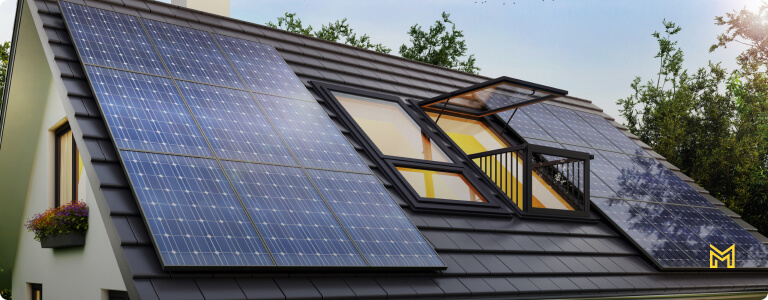
Is your roof optimized for solar panel installation? Your roof’s material, tilt, age, and various other factors play a large role in how much you can benefit from solar. Nobody is going to have the perfect roof for solar, which is fine. But if your roof doesn’t meet some of the ideal conditions for solar, then solar panel installation will likely be much less cost-effective. The ideal roof for solar panels meets most of these conditions:
Not too old (less than 12 years)
Made of asphalt shingles, standing-seam metal, or tiles
Built with a large, un-obstructed face pointing somewhere between southwest and southeast
Tilted at around the same degrees as your latitude
Free from shade throughout the day
It’s important to note that solar panels can be installed on an older roof, but you may end up paying to remove and re-install the panels if you need to re-shingle during the installation’s 25-year lifespan. Similarly, shade can decrease solar energy output, and obstructions on your roof can lead to increased labor costs. Make sure to get multiple solar quotes to get a good idea of where your roof stands when it comes to the costs and benefits of solar installation.
Solar technically doesn’t work at night
At this point, you may be wondering what happens at night. Do solar panels work at night? The answer is technically no. Solar panels require sunlight to generate electricity, which means you’ll still need to be connected to the power grid so that your home has electricity during nighttime and power outages. There’s no getting around the fact that solar panels need sunlight to work. Because of this, many solar homeowners invest in solar batteries. These batteries store unused energy generated from the solar panels, and the stored energy can be used during nighttime and power outages. Plus, any additional leftover energy can be sold back to the power grid. So, what’s the catch? Well, solar batteries are expensive, and the larger your solar system is, the larger (and more expensive) sized battery you’ll need. A solar battery will run you anywhere between $6,100 - $16,000+, depending on which size battery you need and which brand you prefer. You should also know that solar batteries are normally purchased separately, meaning they’re not included in the cost of the solar panels or installation.
The bottom line
Solar panel installation is a big investment that can come with lots of cost-saving benefits for those looking to live in their home for the long term. However, be mindful that solar installation isn’t cheap, and some locations will see more benefits from solar than others.
If you’re like many people, you may be wondering how to lower electric bill costs. The average residential electric bill in the U.S. is $115.49, but what you pay every month can vary wildly depending on the season and location. Your bill may skyrocket for a few months of the year if you live in a...
Like many people, you may be wondering, “Why is my water bill so high?” There are numerous possible reasons for this, but before we dig into the average water bill, it’s important to understand a bit about water bills nationwide. Although the average water bill continues to rise year over year, the...
Moving into a new home involves a lot of planning and preparation, including setting up trash removal services. No one wants to deal with heaps of trash, especially after a move. In this guide, you'll learn more about what garbage pickup service to look for, how to set up your garbage collection...