Defining a Style Series: What is Nordic Design? A Blend of Form and Function
We hope you like the products we recommend. Just so you are aware, MYMOVE may collect a share of sales from the links on this page.
We can't say enough good things about Nordic design. Though this aesthetic has been around since the post-World War II era — and even longer in Northern Europe — it has recently experienced a sharp spike in popularity. Since the look is defined by clean lines, chic minimalism and an overall airy feel, it's not hard to see why so many are intent on bringing a Scandinavian feel to their interiors.
However, it's not always easy to take design inspiration from a photo and bring it to life. In this case, you might wonder how to keep Scandinavian interiors from feeling too stark or what type of furniture works best with the look.
Don't worry. We've compiled a list of the defining factors of Scandinavian design with tips on how to re-create this style in your own home. Whether you've been a fan of Nordic interiors for years or you're just coming into contact with them for the first time, we're sure you'll love what you see.
 CreativaStudio / Getty Images
Shop These Products Now: Bedside Table - Table Lamp
CreativaStudio / Getty Images
Shop These Products Now: Bedside Table - Table Lamp
 KatarzynaBialasiewicz / Getty Images
Shop These Products Now: Dining Chairs
KatarzynaBialasiewicz / Getty Images
Shop These Products Now: Dining Chairs
 onurdongel / Getty Images
CreativaStudio / Getty Images
Shop These Products Now: Bedside Table - Table Lamp
Choose subdued colors
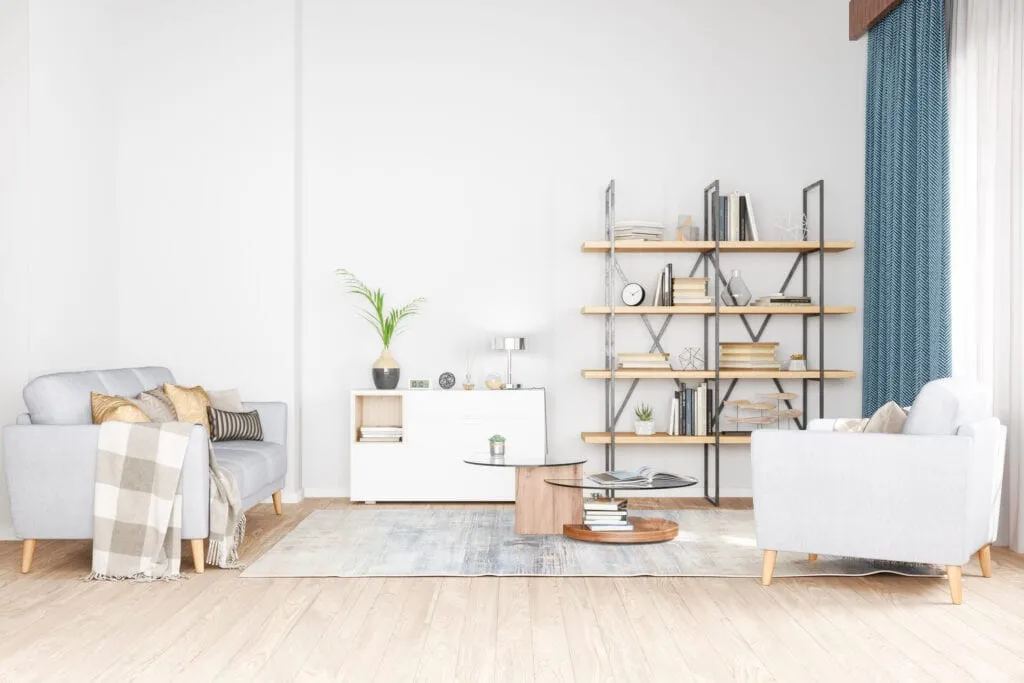
Color is an important place to start when defining any design style. It acts as a backdrop for the rest of the design and helps brings separate elements together in a cohesive manner. In this, Scandinavian design is no exception. This style is often compared to mid-century modern. While it does borrow many details from the earlier trend, their color palettes are what set the two apart. Mid-century modern spaces are known for their dark, rich hues. In Scandinavian spaces, the focus is on keeping things bright, light and airy. To that end, you want to make sure the colors you choose are subdued. Stick to pastel shades and go heavy on neutrals. If you'd like to add a bit more color, icy blues and Millennial Pink are particularly popular shades. KatarzynaBialasiewicz / Getty Images
Shop These Products Now: Dining Chairs
Choose furniture with clean lines
Furniture is one of the identifying factors of Nordic design. It has an undoubtedly specific look. (Anyone who's ever put together an item from Ikea will know the exact aesthetic we're talking about.)Scandinavian furniture features simple silhouettes, clean lines and an emphasis on natural materials. Whenever possible, there's also a focus on choosing well-made, artisanal products over mass-produced pieces. With this style of design, the placement is just as important as the products themselves. You'll want to make your furniture the focal point of the room. Center living rooms around cozy seating areas, master suites around a lush bedroom set, and dining areas around a large farm table.Add warmth through accents
There's one key difference between Nordic design and other minimalist spaces: the comfort level. While many minimalist interiors can come off feeling a little too stark or cold, Scandinavian spaces are meant to be warm and inviting. Cozy, comforting accents are the key to that success. In Nordic countries, they call this concept hygge. Pronounced hoo-gah, the word means comfort in Danish and is a central principle in many Northern European designs. Textiles are a great way to make any room more comfortable. Add plenty of pillows and soft blankets into your design. Then, top everything off with a plush throw rug. Keep in mind there are plenty of ways to bring warmth into the room other than textiles. You could also consider incorporating greenery and using pops of bright accent colors. onurdongel / Getty Images