How to Get a Living Privacy Fence
Privacy in our yards can be a major benefit. Not seeing the neighbors can keep easily distracted pets from roaming off. If you live in an area with smaller yards, lacking a privacy fence can mean becoming an uninvited near-guest to someone else’s family reunion. And sometimes you just want to feel like you’re more at home in your own space. But large privacy fences can get pricey and eventually require replacing. That’s assuming you can find a style you like. And you may live in an area that restricts what kind of fence you can have. That’s where a living privacy fence comes in.
To get a living privacy fence, you simply plan your landscape so that you can’t see the neighbors. You might plant strategic shrubbery or even have full trees at the edge of the property.
This option can get a little pricey, however. It can also take a few weeks to plan, acquire and plant the living fence. You may have to hire a landscaper to assist you. It also might take anywhere from a few months to years for the plants to reach full maturity and give the type of coverage you’re after. But if you want a natural way to add some lush privacy to your yard, a living privacy fence will be worth the investment.
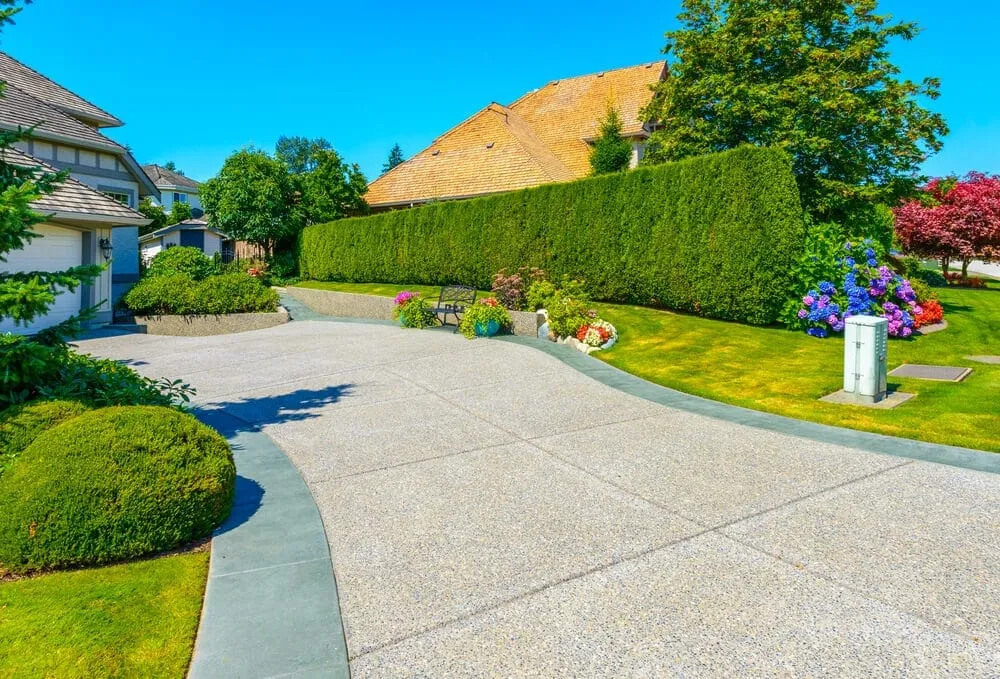
 Trimmed shrubs are a classic option for full privacy. Image: romakoma/Shutterstock
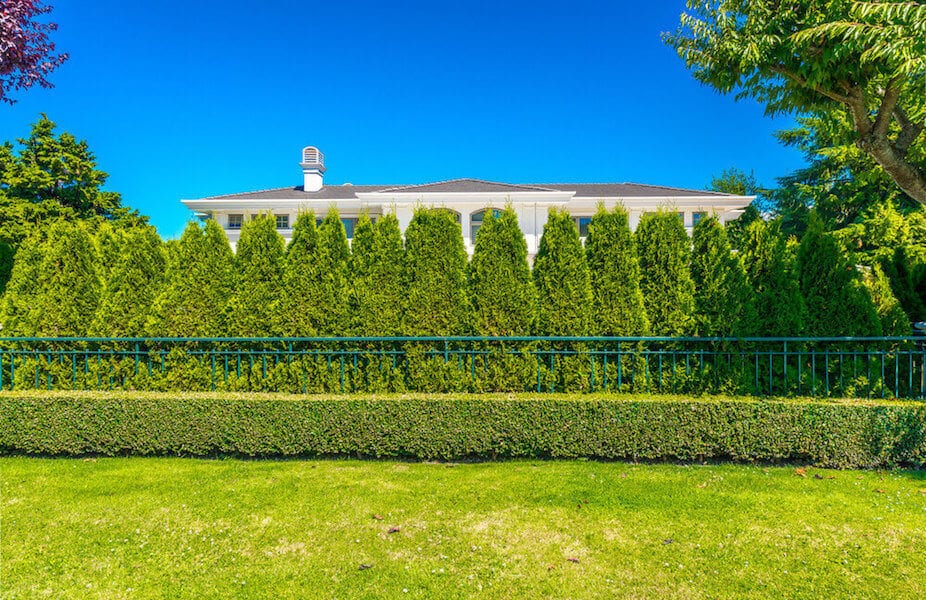 Individual evergreen trees are just one option for a living privacy fence. Image: romakoma/Shutterstock
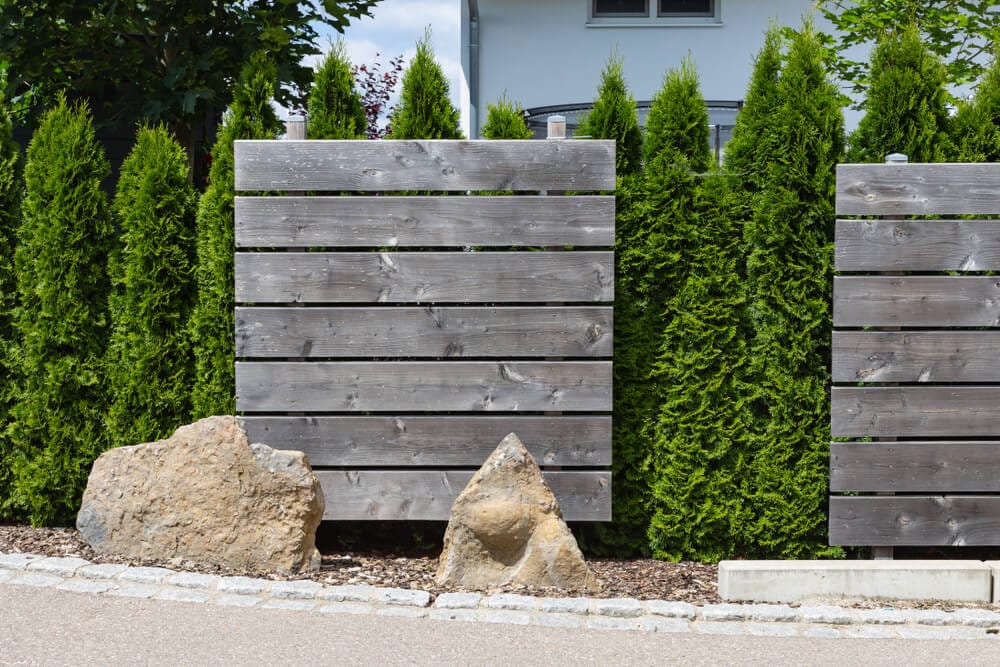 A partial fence and plant design can make a good artistic element in a yard. Image: rudolfgeiger/Shutterstock
Trimmed shrubs are a classic option for full privacy. Image: romakoma/Shutterstock
Decide Just How Much Privacy You Need
You’ll want to start by planning what you want out of a privacy fence. And the first aspect to look at is the level of privacy you need. Do you want complete coverage or is something you can still sort of see through okay? That will determine the type of plants you use and their spacing. Some plants only grow four feet tall, while others can go far higher. Also, remember to check with city ordinances. Some have rules about how much you can obscure a yard. You’ll need to plan your plant coverage around any of these restrictions. You’ll also want to assess how much of the yard you are looking to block. Do you want a privacy fence that extends the full perimeter of the yard? Or is only one direction where you currently have the least privacy acceptable? For instance, a full yard living privacy fence could be best accomplished with thick shrubbery, while partial privacy could just require one larger tree. Individual evergreen trees are just one option for a living privacy fence. Image: romakoma/Shutterstock
Types of Privacy Fences
To start, there are many different types of plants you can use to get a landscape design that affords maximum privacy. These privacy plants include:- Hedges, like privet or yew
- Flowering evergreen shrubs, like pyracantha or holly
- Bamboo
- Evergreen trees like cedar, juniper or arborvitae
- Flowering, full bushes, like enkianthus or lilac
- Cactus
- Living walls
A partial fence and plant design can make a good artistic element in a yard. Image: rudolfgeiger/Shutterstock